
Singapore stands as one of Asia’s most dynamic food markets, and for businesses looking to tap into the halal segment, the opportunities are substantial. With Muslims making up roughly 15% of the local population and millions of Muslim tourists passing through annually, the demand for certified halal food in Singapore continues to grow at a remarkable pace.
Yet sourcing halal-compliant products and ingredients for your business is not as straightforward as it might seem. Between navigating MUIS certification requirements, identifying trustworthy suppliers, and maintaining supply chain integrity, many businesses find themselves overwhelmed before they even get started.
This guide was built specifically for food business owners, procurement managers, and hospitality professionals who already understand the basics and are ready to sharpen their sourcing strategy. Inside, you will find a curated breakdown of supplier categories, certification red flags to watch for, practical sourcing channels, and key considerations that experienced buyers use to protect their operations. Whether you are scaling an existing operation or entering the halal market for the first time, this resource will give you the clarity and direction you need to move forward with confidence.
Why Singapore Is a Strategic Hub for Halal Food
Singapore occupies a uniquely advantageous position in the global halal food economy, and the numbers confirm why this matters for every F&B buyer, importer, and wholesaler operating on the island.
The Asia halal food market is growing faster than any other regional segment worldwide, expanding from USD 929.48 billion in 2024 to a projected USD 2.05 trillion by 2033 at a CAGR of 9.22%. Asia-Pacific already accounts for 46.2% of total global halal food market growth share, driven by the world’s largest concentration of Muslim consumers and rapidly urbanising populations across Indonesia, Malaysia, Bangladesh, and beyond. For Singapore-based businesses, this trajectory is not a distant macro trend; it is the commercial environment in which procurement decisions are made today.
Singapore’s structural advantages in this market are threefold. First, the Singapore Food Agency (SFA) and MUIS (the Islamic Religious Council of Singapore) provide a regulatory and certification framework that carries strong international credibility, enabling halal-certified goods imported through Singapore to meet the compliance expectations of buyers across the region. Second, Singapore’s network of free trade agreements, including agreements under ASEAN, as well as bilateral arrangements with major trading partners, reduces tariff friction on imported halal-certified goods and streamlines cross-border sourcing. Third, the Port of Singapore consistently ranks among the world’s busiest and most efficient container hubs, supporting reliable, high-volume inbound supply chains for dry goods, spices, packaged foods, and ambient grocery products central to the halal wholesale trade.
The proximity to Indonesia and Malaysia amplifies these advantages considerably. Indonesia’s halal product exports reached approximately USD 41.42 billion between January and October 2024 alone, while Malaysia operates one of the most institutionally recognised halal certification ecosystems globally. Both countries serve as primary supply markets for Singapore-based wholesalers, enabling competitive procurement of everything from rice and pulses to ready-to-eat meals and ambient beverages. You can explore the halal food market growth and size report for a broader view of how these supply corridors are shaping global trade.
Locally, Singapore’s logistics infrastructure enables efficient last-mile distribution across the entire island, allowing wholesalers to serve a remarkably diverse customer base: hawker stall operators sourcing weekly dry goods, hotel kitchens managing large-volume standing orders, institutional caterers requiring consistent specification and certified compliance, and independent restaurants expanding their menus with authentic ingredients. This full-spectrum serviceability is a direct function of Singapore’s compact geography and mature distribution networks.
At the global level, the halal food market is valued at USD 2,614 billion in 2025 and projected to reach USD 3,219 billion by 2032 at a CAGR of 4.24%, according to market analysis data. This sustained growth signals long-term commercial viability for every participant in Singapore’s halal food supply chain, from importers and wholesalers through to end buyers. For businesses evaluating supplier partnerships, Singapore’s position as a regulated, logistics-capable, and supply-connected trade node makes it a procurement base of genuine strategic value.
Understanding MUIS Halal Certification in Singapore
For any business sourcing halal food in Singapore, one regulatory name sits at the centre of every compliance decision: MUIS. Majlis Ugama Islam Singapura, the Islamic Religious Council of Singapore, is the sole government authority empowered to issue halal certificates in the local market. Its jurisdiction spans the full breadth of the F&B sector, covering eating establishments, food manufacturers, central kitchens, caterers, and food product importers. No other body carries equivalent legal standing in Singapore, which means that any supplier claiming halal status for the local market must hold a valid, current MUIS certificate, not a foreign equivalent assumed to be interchangeable.
What MUIS Certification Actually Requires
The rigour of MUIS certification is frequently underestimated by buyers who assume halal compliance is simply a matter of ingredient checking. In reality, MUIS operates under two core standards, MUIS-HC-S001 and MUIS-HC-S002, which together govern a comprehensive compliance framework. Businesses must satisfy staffing requirements, including a minimum of two Muslim staff members with at least one trained through the official Halal Training Programme. They must also implement the ten principles of the Singapore MUIS Halal Quality Management System (HalMQ), which mandates documented traceability across the entire preparation and supply chain process. Post-certification compliance reports and periodic inspections ensure that standards are maintained, not simply met at the point of application. This makes MUIS one of the most operationally thorough halal certification frameworks in Southeast Asia.
MUIS vs. JAKIM vs. MUI: Why the Distinction Matters for B2B Buyers
A peer-reviewed comparative study published in Foods (2026) confirms that MUIS, Malaysia’s JAKIM, and Indonesia’s MUI/BPJPH each operate under distinct governing standards and audit frameworks. JAKIM applies the Malaysian Halal Management System 2020 and MS 1500:2019, while MUI/BPJPH operates under HAS 23:10:3:2012. MUIS governs through its own MUIS-HC-S001 and MUIS-HC-S002 standards. For Singapore-based importers, this distinction carries direct procurement consequences: a JAKIM or MUI certificate on an imported product does not automatically satisfy MUIS requirements unless that foreign body appears on MUIS’s recognised Foreign Halal Certification Bodies (FHCB) registry. From 1 October 2025, MUIS upgraded this FHCB framework with stricter audits, digital processing systems, and clearer recognition criteria, meaning B2B buyers must actively cross-check imported goods against the current FHCB list rather than relying on legacy assumptions.
Practical Verification Steps for B2B Procurement
Supplier certificate management is an area where procurement teams frequently encounter avoidable risk. As outlined in practical guidance for F&B businesses applying for halal certification in Singapore, supplier certificate expiry during an active procurement cycle is a common and costly problem. The correct verification process involves three steps: requesting the specific MUIS certificate number from your supplier, checking its current validity on the MUIS online halal portal, and confirming that the certified product categories listed on the certificate precisely match the goods being purchased. A certificate issued to a company name does not automatically cover every product that company sells. Tracking renewal timelines proactively, rather than only at the point of first purchase, is equally important given that MUIS certificates follow annual renewal cycles.
Halal Certification as a Commercial Quality Signal
Beyond religious compliance, halal certification is now recognised as a broader indicator of food safety, hygiene, and ethical sourcing. This shift is commercially significant in Singapore’s multicultural F&B sector, where institutional buyers, hotel groups, and catering operators increasingly treat halal certification as a quality proxy regardless of the religious profile of their customer base. With the global halal food market serving approximately 1.9 billion Muslim consumers and growing appeal among non-Muslim buyers, the commercial case for halal-certified sourcing extends well beyond any single demographic. For B2B buyers, partnering with suppliers who hold verified, current MUIS certification is therefore both a compliance requirement and a defensible quality standard.
Singapore’s Halal Food Landscape: Who Is Buying and Why It Matters
Singapore’s domestic demand for halal-certified food is anchored by a Muslim population of approximately 500,000 residents, representing roughly 15% of the total resident population. This is not a niche or seasonal market. It represents a consistent, non-discretionary demand base spread across every channel in the food supply chain, from hawker centre operators sourcing daily ingredients to hospital caterers managing weekly bulk orders. The scale and stability of this base make halal food supply one of the most commercially reliable segments any B2B food distributor in Singapore can serve.
The B2B Buyers Driving Volume
Understanding who is actually purchasing halal-certified food in bulk clarifies where the real commercial weight sits. The primary B2B buyer segments include:
- Hawker stall operators and QSR chains, who require consistent, certified ingredient supply to maintain their own MUIS certification status across high-volume daily operations
- Hotel and banquet kitchen teams, who cater to events where halal compliance is non-negotiable for a significant proportion of guests
- Institutional caterers serving hospitals, schools, and corporate canteens, where procurement teams require documented certification as a mandatory compliance criterion
- Supermarkets and specialty grocery retailers, who maintain dedicated halal sections serving both Muslim households and quality-conscious non-Muslim shoppers
- Food manufacturers, who need certified upstream ingredients to maintain their own halal product status through the full production chain
Singapore currently has 4,938 halal-certified F&B establishments, with certification numbers growing consistently from 2018 to 2022. Each of these businesses represents an active, recurring demand node in the halal supply chain.
Why the Market Rewards Quality Sourcing
Global Muslim consumer spending on halal food reached USD 1.43 trillion in 2023 and is projected to climb to USD 1.94 trillion by 2028. Singapore’s Muslim consumer base skews toward premium preferences, rewarding certified suppliers who deliver traceable, high-quality products over those competing on price alone.
A commercially critical dynamic sets Singapore apart from other regional markets. Halal certification here extends its reach well beyond Muslim consumers. Non-Muslim Singaporeans increasingly associate the MUIS mark with hygiene standards and ethical sourcing practices, which broadens the addressable customer base for any certified F&B operator. A hawker stall or restaurant kitchen sourcing from a certified supplier effectively gains access to a wider cross-cultural diner pool, something that directly affects revenue potential.
Reinforcing all of this is a structural market reality: offline wholesale and distribution channels, including supermarkets, specialty stores, and B2B wholesale suppliers, held the largest revenue share in the halal food market in 2024. For F&B businesses in Singapore, trusted physical supplier relationships remain the backbone of reliable, audit-ready halal procurement.
Key Halal Food Categories Every Singapore B2B Buyer Should Know
For procurement managers and F&B operators sourcing halal food in Singapore, understanding which product categories carry the highest compliance requirements, the greatest volume demand, and the most complex supply chain considerations is essential to making sound purchasing decisions. The five categories below represent the core of what serious B2B buyers need to have mapped, vetted, and supplier-ready.
1. Spices and Dry Seasonings
Spices are the foundation of Singapore’s most commercially dominant cuisines, including Indian, Malay, Middle Eastern, and contemporary fusion. A procurement manager who secures a reliable halal-certified spice supplier gains a significant operational advantage, since inconsistent spice sourcing is one of the most disruptive variables in high-volume kitchen environments. The critical compliance point here is breadth: buyers should only work with suppliers whose entire spice range carries verified halal certification, not merely selected product lines. Batch-level certification consistency matters because MUIS standards scrutinise cross-contamination risks at processing facilities, meaning a supplier whose product labelling lacks clear country of origin or lot traceability introduces avoidable audit risk. Requiring a full spice catalogue with certification documentation per SKU is a reasonable baseline expectation for any B2B sourcing relationship.
2. Basmati Rice and Grains
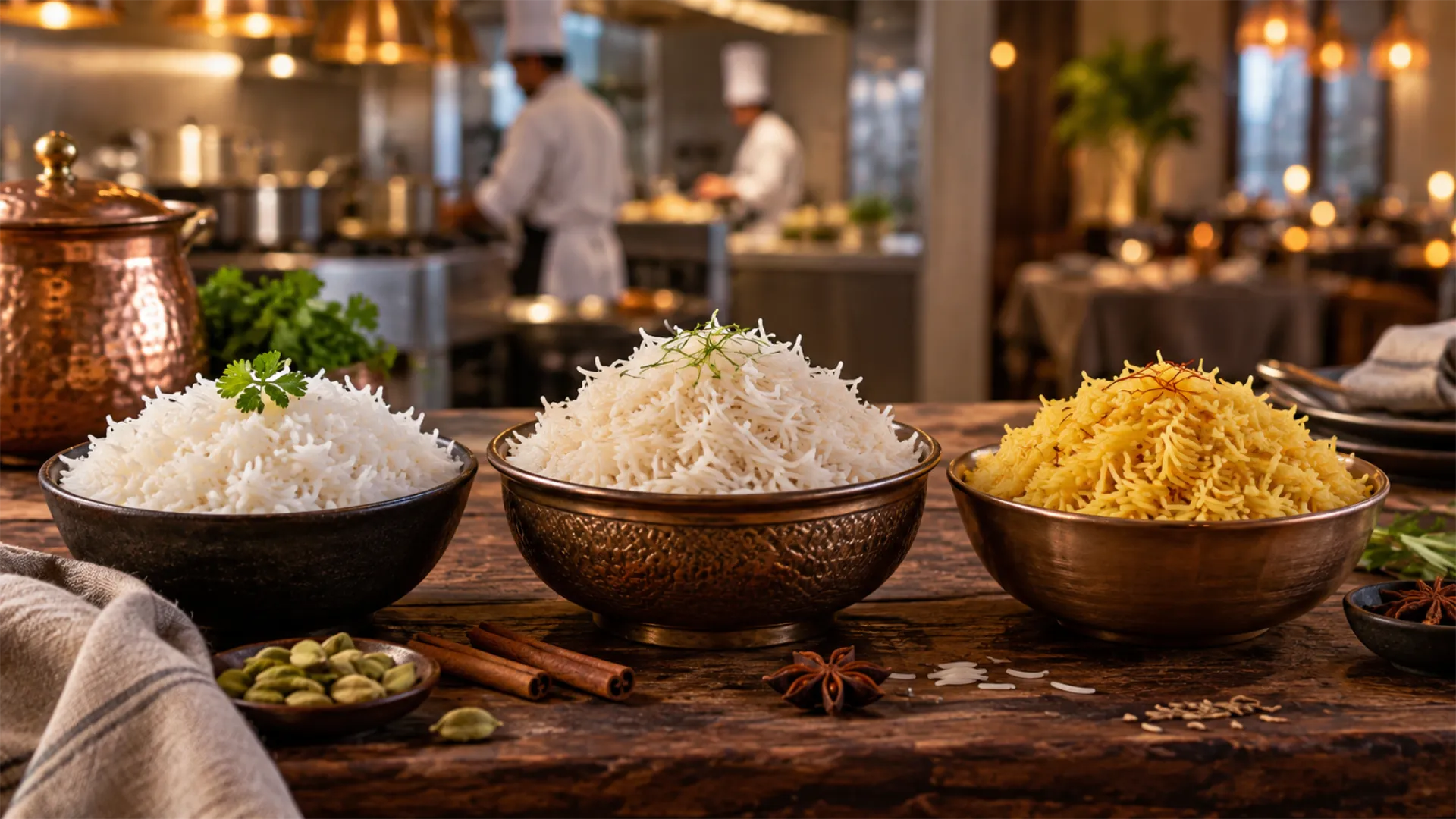
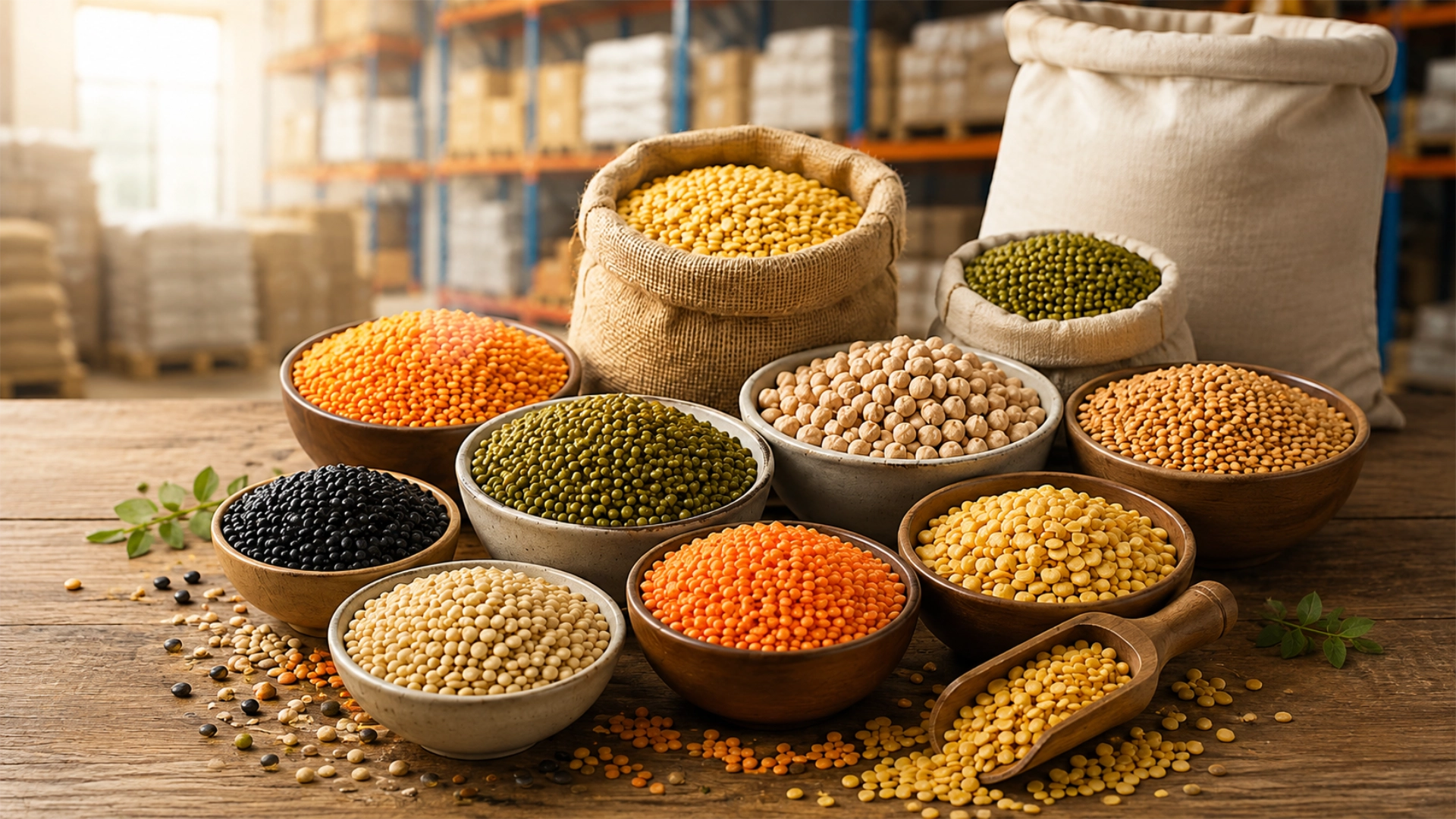
Basmati rice, along with related staples such as dals, lentils, and pulses, sits at the top of volume procurement lists for Indian restaurants, biryani specialists, hotel banqueting teams, and institutional caterers across Singapore. Buyers evaluating suppliers in this category should assess grain length specifications, moisture content tolerances, and the supplier’s demonstrated capacity to fulfil bulk or pallet-level orders at competitive per-unit pricing. These technical parameters directly affect end-product quality; a biryani kitchen operating at scale cannot absorb inconsistent grain quality across deliveries. Within the global halal food market, cereals and grains represent a recognised product segment growing alongside meat and dairy categories, reflecting strong institutional demand.
3. Ready-to-Eat and Convenience Meals
The halal-certified ready-to-eat segment is expanding rapidly as foodservice operators respond to labour cost pressures and faster service expectations. Urbanisation and changing lifestyles in Singapore have directly increased preference for convenient halal foods, as noted in analysis of the Singapore halal food and drink market. The compliance requirement for RTE products is more complex than for raw ingredients: certification documentation must be unbroken, covering both the original manufacturer and the local importer or distributor. Buyers who skip this dual-layer verification expose their operations to MUIS audit failures that are entirely preventable.
4. Halal-Certified Beverages
Halal-certified beverages constitute a consistent and growing procurement line for cafes, restaurants, and institutional caterers. Indian-origin beverages carry particularly strong commercial demand across Singapore’s diverse dining scene; masala chai concentrates, mango drinks, and specialty syrups are regular reorder items for operators serving multicultural customer bases. MUIS certification requirements apply equally to beverage products and their imported ingredients, making supplier documentation checks non-negotiable in this category.
5. Indian Halal Groceries as a Specialist Niche
The combination of Indian grocery staples, specifically dals, lentils, chickpea flour, curry pastes, and pickles, with verified halal certification is a sourcing gap that most general wholesaler catalogues have not addressed. According to USDA research on halal food in Singapore, Singapore’s Indian Muslim community drives distinct and consistent demand for precisely this product combination. A supplier that structures their catalogue around this niche simultaneously serves Indian Muslim restaurants, North Indian cuisine operators, and multi-cuisine catering teams, making it one of the most strategically differentiated positions available in Singapore’s halal wholesale market.
Dashmesh’s Halal-Certified Product Range for Singapore Businesses
Founded in 1985, Dashmesh has spent four decades building a reputation as one of Singapore’s most reliable wholesale food suppliers, headquartered at 27 Penjuru Lane, AIMS Building. The company specialises in Indian groceries and dry foods, serving a broad B2B client base that includes restaurants, institutional caterers, supermarket chains, and food retailers across the island. With over 40 years of operational history in Singapore’s food supply market, Dashmesh brings category depth and procurement reliability that generalist distributors are rarely positioned to match. Long-standing client relationships of 20 or more years, including with established F&B operators in Singapore, reflect the consistency buyers expect from a primary halal-certified ingredient supplier.
A Product Range Built Around B2B Procurement Needs
The Dashmesh halal product range covers five core categories that align directly with high-volume procurement demand in Singapore’s food service sector. Premium basmati rice sits at the centre of the portfolio; Dashmesh is credited with introducing Lal Qilla Basmati Rice to Singapore and continues to be a leading wholesale source for this category. If you are evaluating sourcing options, the company’s own basmati rice wholesale buying guidance is a useful reference for bulk procurement decisions. Beyond rice, the product range extends to whole and ground spices distributed under specialist brands including MDH, ready-to-eat Indian meals under formats such as Gits, cashewnuts and dry fruits, and a selection of Indian beverages including Amul dairy products. All categories are supplied at competitive bulk pricing structured for high-volume, repeatable ordering cycles.
Supporting Halal Compliance for MUIS-Certified Operations
For B2B buyers operating MUIS-certified kitchens or building halal-compliant menus, supplier documentation is a non-negotiable part of the procurement process. Dashmesh provides product-level halal status information and certification documentation to support buyers in maintaining their own compliance audit trails. This is particularly relevant for catering companies, hotel kitchens, and institutional food operators where ingredient traceability must be evidenced during MUIS audits. Having a single wholesale supplier who can consolidate this documentation across multiple product categories significantly reduces administrative friction.
Specialist Expertise Across Specialty Indian Ingredients
What separates Dashmesh from generic food distributors is source-market knowledge accumulated across decades of trading in Indian grocery categories. Specialty items such as regional Indian lentils, whole spice blends, and authentic RTE meal formats require precise supplier relationships and procurement expertise that most broad-line distributors do not carry. Buyers sourcing these ingredients through non-specialist channels frequently encounter inconsistency in product origin, grade, or halal certification status. Dashmesh’s established partnerships with brands requiring authentic category knowledge mean that procurement managers gain both the product range and the expertise to procure correctly, consistently, and at scale.
How to Evaluate a Halal Food Wholesale Supplier in Singapore
Choosing the right halal food wholesale supplier in Singapore is not simply a procurement decision. It is a compliance responsibility. With MUIS operating active market surveillance and penalties for unauthorised halal claims reaching up to S$10,000 and 12 months’ imprisonment, B2B buyers cannot afford to rely on assurances alone. Here are five criteria every procurement manager should apply when evaluating a halal food wholesale supplier.
1. Certification Documentation: Verify, Never Assume
The starting point for any supplier assessment is the MUIS certificate itself, and this requires more than a glance at a logo on a website. Request the specific MUIS certificate number for each relevant product category, confirm the expiry date on file, and cross-check it independently on the MUIS eHalal portal at ehalal.muis.gov.sg. MUIS now issues digital halal certificates enabling real-time verification, so there is no excuse for ambiguity. A certificate listing only a company name without specifying product categories or applicable schemes is insufficient; suppliers handling packaged wholesale goods should hold certificates under Scheme 5 (Product) or Scheme 7 (Whole Plant), while storage and distribution operations fall under Scheme 6. For imported products sourced from India, Malaysia, or Indonesia, the relevant overseas producer must be certified by a MUIS-recognised Foreign Halal Certification Body. Critically, that recognition status can lapse, so buyers should confirm the overseas certifier still appears on MUIS’s current FHCB list before placing orders.
2. MOQs and Lead Times: Align Before You Commit
Understanding minimum order quantities and replenishment lead times is especially important when sourcing imported dry goods. Products arriving from source markets in South Asia or Southeast Asia can face extended restocking cycles depending on shipping schedules, port clearances, and in-country production timelines. Confirm whether the supplier’s MOQs match your actual consumption volumes, and ask explicitly about average lead times for each product category. A supplier who is transparent about these parameters from the outset is likely to be a more reliable operational partner over time.
3. Product Range Breadth: Fewer Suppliers, Fewer Compliance Gaps
A wholesale supplier covering spices, grains, ready-to-eat meals, and beverages under one roof reduces both procurement complexity and the number of certification chains you need to manage simultaneously. Consolidating categories with a single, well-certified supplier also simplifies delivery logistics and audit preparation. However, breadth of product range must be matched by depth of certification coverage; always verify that each category carries its own independently documented halal certificate rather than a blanket claim.
4. Delivery Reliability and Operational Fit
For ambient dry goods, ask suppliers about delivery frequency across Singapore, geographic service coverage, and whether they can support scheduled or standing order arrangements. Kitchens and food production operations benefit significantly from predictable replenishment cycles that reduce the risk of stockouts during peak periods. A supplier maintaining a Scheme 6 certified storage facility adds further assurance that halal segregation standards are upheld throughout warehousing and dispatch.
5. Digital Traceability: The Due-Diligence Standard of 2025 and Beyond
As reflected in MUIS Halal Development’s engagement at international forums including KazanForum 2026, Singapore is actively positioning its digital certification infrastructure as a model for the global halal ecosystem. Forward-thinking B2B buyers should ask suppliers whether they can provide batch-level documentation, digital certificate links, or structured audit trails. Suppliers investing in traceability infrastructure will be stronger compliance partners as due-diligence expectations across the industry continue to rise. In a procurement environment where a single lapsed certificate can disrupt your entire halal compliance posture, choosing a supplier who treats documentation as a live, verifiable system rather than a one-time formality is a strategic advantage.
Regulatory and Compliance Context for Halal Food Import in Singapore
Importing halal food into Singapore places businesses under not one but two distinct regulatory frameworks, and both must be satisfied simultaneously. The Singapore Food Agency governs the import, sale, and labelling of all food products entering the country, requiring valid customs permits through Singapore Customs’ TradeNet system before goods physically arrive. Separately, MUIS administers halal certification standards that apply to any product carrying a halal claim. Importers bear full responsibility for meeting both sets of requirements, and neither framework accepts the other as a substitute. A product that clears SFA food safety requirements but carries an unrecognised halal certificate is non-compliant. A product with valid halal certification that fails SFA labelling or safety requirements is equally non-compliant.
Halal Labelling Standards and the Sale of Food Act
Singapore’s legal position on halal labelling is unambiguous. Any halal claim appearing on a food product’s packaging must be substantiated by a valid certificate issued by a recognised certifying body. For products certified within Singapore, that body is MUIS. For imported products, the halal certificate must originate from a foreign halal certification body (FHCB) that MUIS formally recognises. This is not a discretionary standard; it is a legal requirement enforceable under the Sale of Food Act and its subsidiary legislation. Presenting misleading food claims, including unsubstantiated halal declarations, exposes importers and retailers to regulatory action. Notably, MUIS enhanced its FHCB recognition framework effective 1 October 2025, introducing stricter vetting criteria, a new digital processing system, and stronger legal backing. This means a foreign certifier that was previously recognised may require re-verification under the updated framework before its certificates remain valid for Singapore market entry.
Import Documentation B2B Buyers Must Verify
For businesses sourcing from wholesale suppliers, documentation verification is a practical compliance task, not a formality. Buyers should confirm that supplier import records include a valid customs permit obtained through TradeNet, a Certificate of Origin, applicable health certificates for the product category (particularly for meat and animal-derived products, which require SFA-accredited overseas establishment approval), and a halal certificate issued by an MUIS-recognised FHCB under the post-October 2025 approved list. Accepting documentation from a foreign certifier not currently on the active MUIS recognition list creates an immediate compliance gap, regardless of how credible that certifier may appear.
The Compliance Chain and Supplier Selection
For food manufacturers and caterers operating under their own MUIS certification, the compliance obligation extends upstream into their supply chain. MUIS standards govern the full production and ingredient sourcing process, which means every input sourced from a wholesale supplier must itself be traceable to a halal-certified origin. If a supplier’s documentation lapses or proves invalid, the buyer’s own MUIS certification standing is directly at risk. This elevates supplier selection from a pricing or logistics decision to a certification-critical business responsibility. Across the region, this compliance pressure is intensifying: Indonesia has been rolling out mandatory halal certification for all food imports in phases extending through 2026, tightening the supply ecosystem that feeds Singapore’s halal import market. Businesses that establish disciplined supplier vetting practices now will be significantly better positioned as regional regulatory standards continue to converge.
Emerging Trends Reshaping Singapore’s Halal Food Supply Chain
Singapore’s halal food supply chain is not static. Five structural shifts are converging simultaneously, and wholesalers, importers, and F&B operators who recognise these trends early will hold measurable advantages in procurement, product range, and supplier relationships over the next three to five years.
1. Blockchain and AI Traceability Are Becoming Procurement Baselines
Digital traceability tools, including blockchain, IoT sensors, and AI-driven audit systems, are transitioning from innovation pilots to baseline expectations in credible halal supply chains. Research presented at the 2025 ASEAN University Symposium for Sustainable Food Systems confirmed that technologies such as blockchain, IoT, and data analytics enable more reliable halal verification across ASEAN supply networks, enhancing both consumer trust and operational efficiency. For Singapore’s larger B2B buyers, particularly hotel groups, institutional caterers, and multi-outlet restaurant chains, the ability to verify halal compliance at every node, from origin farm to delivery dock, is becoming a supplier selection criterion rather than a bonus feature. Wholesalers who can provide digital audit trails, certification documentation accessible on demand, and supply chain transparency will be positioned to win procurement contracts that more opaque suppliers will lose.
2. Plant-Based Halal Alternatives Are Scaling Faster Than Expected
Plant-based proteins and food products are now tracked as a distinct and converging category alongside halal food by Asia’s largest food and beverage trade platforms. Younger Muslim consumers in Singapore are increasingly seeking food choices that satisfy both halal compliance and broader ethical, sustainability-driven values. This creates an opening for wholesalers willing to expand their product range into certified plant-based halal alternatives. The demand stream is still emerging but is scaling at a pace that rewards early movers who build category expertise and supplier relationships now rather than waiting for mainstream saturation.
3. Digital Procurement Channels Are Displacing Traditional Sales Rep Models
Asia-Pacific market analysis from Mordor Intelligence formally identifies online retail as a structurally distinct and growing distribution channel for halal food products. This shift extends into B2B procurement: buyers increasingly research, shortlist, and contact suppliers through digital channels before any human conversation occurs. Suppliers who maintain transparent online product catalogues, publish downloadable halal certification documents, and offer responsive digital enquiry channels will capture a growing share of procurement decisions that are being made online. Suppliers without a credible digital presence risk being excluded from consideration before they ever receive a call.
4. Regional Sourcing Networks Are Becoming a Competitive Differentiator
Indonesia’s halal product export performance reached approximately USD 41.42 billion between January and October 2024, reflecting the country’s dominant and expanding position as a regional halal supplier. Alongside this, Malaysia and Bangladesh signed MoUs in August 2025 to integrate Bangladesh into the global halal supply chain, signalling that the regional supplier ecosystem accessible to Singapore-based wholesalers is broadening. Wholesalers with established sourcing relationships across multiple regional markets, including Indonesia, Malaysia, and South Asia, will hold both cost and product availability advantages over those dependent on narrower supply bases.
5. Halal Certification Is Gaining Traction as a Universal Quality Signal
Market research from TechNavio confirms that non-Muslim consumers are increasingly associating halal certification with food safety, hygiene, and ethical sourcing standards. This finding is reinforced by the 2025 ASEAN traceability study, which noted that improved halal compliance frameworks “not only guarantee religious compliance but also strengthen food safety systems, enhance supply chain efficiency, promote sustainability, and boost consumer confidence.” For Singapore F&B operators serving mixed consumer bases, this broadens the commercial rationale for sourcing halal-certified ingredients beyond religious obligation. Halal certification is becoming a procurement and marketing asset with relevance well beyond its original compliance function.
Frequently Asked Questions About Halal Food Sourcing in Singapore
Q1: What is the difference between MUIS certification and foreign halal certifications like JAKIM or MUI, and which should Singapore F&B operators rely on?
MUIS is Singapore’s sole statutory halal certifier, operating under the Administration of Muslim Law Act. Only a MUIS-issued certificate carries legal recognition within Singapore, and displaying an unauthorised halal sign attracts a fine of up to S$10,000 and up to 12 months’ imprisonment. Foreign bodies such as Malaysia’s JAKIM and Indonesia’s MUI or BPJPH are legitimate certification authorities within their own jurisdictions, but they carry no direct legal standing in Singapore. MUIS does operate a formal recognition programme that assesses and acknowledges select overseas certification bodies, meaning certificates from recognised foreign bodies can serve as supporting evidence during ingredient-sourcing evaluations. However, Singapore F&B operators must hold or actively work toward a MUIS certificate. A foreign certificate alone is never sufficient for operating or marketing halal food in Singapore.
Q2: Can a restaurant be MUIS-certified if its ingredients come from a supplier holding only a foreign halal certificate?
Yes, under specific conditions. MUIS requires that all ingredients either come from halal-certified suppliers or fall within its approved syubhah-free list. Ingredients backed by a certificate from a MUIS-recognised foreign body, such as JAKIM, can potentially satisfy the ingredient-sourcing requirement. The restaurant’s Halal Assurance System submission must document full traceability for every ingredient, which means foreign supplier certificates need to be included in that audit trail. The restaurant’s own operating certificate must still be MUIS-issued regardless of where ingredients originate. Operators sourcing from a wholesale supplier should always request the relevant halal documentation upfront to ensure it is accepted within their compliance submission.
Q3: How often does MUIS certification need to be renewed, and what triggers a lapse?
MUIS halal certificates are valid for either one or two years, with renewal applications automatically initiated 120 days before the expiry date. Average processing time for renewals is approximately six weeks, assuming complete documentation. Key triggers that can cause a certification lapse include unannounced post-certification inspections, undisclosed changes to menu items or ingredient sources, and failure to update contact or operational information through the official portal. QR-enabled certificates, introduced from October 2025, allow real-time status verification, making non-compliance visible to customers and regulators instantly.
Q4: What halal-certified product categories does Dashmesh supply, and how do I request documentation?
Dashmesh supplies a broad range of halal-certified products suited to restaurant, retail, and institutional buyers. Core categories include basmati rice, Indian spices and masalas, ready-to-eat meals, cashewnuts, lentils, and beverages. Businesses requiring halal documentation for a specific product line can contact Dashmesh directly through their website or by visiting their warehouse at 27 Penjuru Lane, AIMS Building. Their team is equipped to provide certification references and supplier documentation to support your MUIS Halal Assurance System submission.
Q5: Are there minimum order quantities for halal bulk food orders, and how are deliveries scheduled?
As a wholesale supplier serving restaurants, retailers, and institutional clients across Singapore, Dashmesh structures its supply model around bulk ordering. Minimum order quantities vary by product category and are best confirmed directly with their sales team. Deliveries are scheduled across Singapore, with flexibility to accommodate the restocking cycles typical in commercial kitchens and retail operations. Businesses looking to establish a reliable halal supply arrangement are encouraged to contact Dashmesh to discuss order volumes, lead times, and delivery frequency suited to their operational needs.
Choosing the Right Halal Food Partner for Your Singapore Business
Selecting the right halal food wholesale partner in Singapore comes down to five core criteria: certification verification, product range alignment, MOQ flexibility, delivery reliability, and supplier traceability. Each criterion carries direct compliance and commercial weight. A supplier whose certifications are current, documented, and MUIS-aligned removes verification burden from your procurement team and protects your business against downstream audit exposure.
Singapore’s position at the centre of Asia’s halal food economy adds a compelling commercial dimension to local sourcing. With the Asia halal food market projected to reach USD 2.05 trillion by 2033 at a CAGR of 9.22%, businesses that build credible local supply chains now gain a measurable lead. Sourcing through a Singapore-based wholesaler means shorter lead times, MUIS-compliant documentation as a baseline, and a supplier already calibrated to local regulatory requirements.
Dashmesh, located at 27 Penjuru Lane, AIMS Building, Singapore, brings specialist expertise across Indian groceries, dry foods, spices, basmati rice, ready-to-eat meals, and beverages. With competitive bulk pricing and dedicated B2B service credentials built over decades, Dashmesh is structured to serve F&B operators, caterers, retailers, and restaurant groups at scale.
For wholesale halal food enquiries, product certification information, and bulk order pricing, contact Dashmesh directly via dashmesh.com.sg.
Conclusion
Navigating Singapore’s halal food sourcing landscape does not have to be complicated. The key takeaways are clear: understand and respect MUIS certification requirements, build relationships with verified and trustworthy suppliers, protect your supply chain integrity at every stage, and stay ahead of evolving compliance standards.
Businesses that invest in getting their halal sourcing strategy right gain more than compliance. They earn the trust of a loyal, growing consumer base and position themselves competitively in one of Asia’s most lucrative food markets.
Now is the time to act. Review your current supplier list against the criteria outlined in this guide, identify any gaps, and start building a more reliable halal sourcing framework today.
The demand is real, the market is ready, and the right sourcing strategy is what separates businesses that simply participate from those that truly lead.