
Introduction
For restaurants, caterers, hotels and foodservice businesses, rice is more than a basic ingredient. It affects flavour, texture, presentation, portion control and customer satisfaction. This is especially true when choosing basmati rice wholesale Singapore, where consistency matters in every plate of biryani, pulao, curry rice set or buffet spread.
Basmati rice is valued for its long grains, natural aroma and fluffy cooked texture. When prepared well, the grains stay separate instead of becoming sticky or heavy. This makes it a popular choice for Indian restaurants, Pakistani cuisine, Middle Eastern menus, catering kitchens and businesses that serve rice-based dishes in large quantities.
For food businesses, choosing the right wholesale food supplier in Singapore is not only about price. It is also about supply reliability, product range, delivery support and rice quality that performs well in a commercial kitchen. Dashmesh has been serving the Singapore market since 1985, supplying Indian and Pakistani food products to restaurants, retailers and grocery businesses.
Why Basmati Rice Matters for Restaurants
In a restaurant kitchen, rice must deliver the same result every day. Customers expect biryani rice to be fragrant, long-grained and fluffy. Curry rice should not become mushy. Buffet rice must hold well during service without losing texture too quickly.
That is why many food businesses prefer buying from a reliable restaurant and B2B food supply partner. A dependable supplier can help restaurants manage repeat orders, bulk pack sizes and regular stock availability more efficiently.
For restaurants, the right basmati rice can support better dish presentation, consistent cooking performance, improved aroma, efficient bulk preparation and better cost control. When rice is a major part of the menu, choosing the cheapest option may not always deliver the best value. Poor-quality rice can lead to broken grains, inconsistent cooking, weak aroma and higher wastage.

What Makes Good Basmati Rice Different?
Good basmati rice is known for its slender grain, delicate aroma and light texture after cooking. Unlike short-grain rice, basmati is usually preferred when the final dish needs separate, fluffy grains.
According to APEDA’s Basmati Rice overview, Basmati is a long-grain aromatic rice grown for many centuries in specific geographical areas in the Himalayan foothills of the Indian subcontinent. APEDA also describes its extra-long slender grains, elongation after cooking, soft texture, aroma and distinct flavour.
Restaurants often look for basmati rice that:
- Has long, uniform grains
- Gives off a pleasant natural aroma
- Expands well after cooking
- Stays separate instead of clumping
- Absorbs spices and flavours properly
- Performs consistently across batches
This is especially important for biryani, where the rice must hold its structure while absorbing flavour from spices, herbs, meat, vegetables or gravy.
Aroma, Grain Length and Authenticity
Aroma is one of the main reasons chefs choose basmati rice. The natural fragrance of scented rice is strongly associated with the compound 2-acetyl-1-pyrroline, often shortened to 2-AP. Research indexed on PubMed identifies 2-AP as a principal aroma compound found in fragrant rice varieties.
Authenticity can also matter for buyers who want recognised origin and quality standards. APEDA’s Basmati Net states that Basmati rice became a registered Geographical Indication product with effect from 5 February 2016.
For restaurants, this does not mean every dish must use the most premium rice available. It means the buyer should understand what grade, brand and pack size best matches the menu, price point and customer expectation.
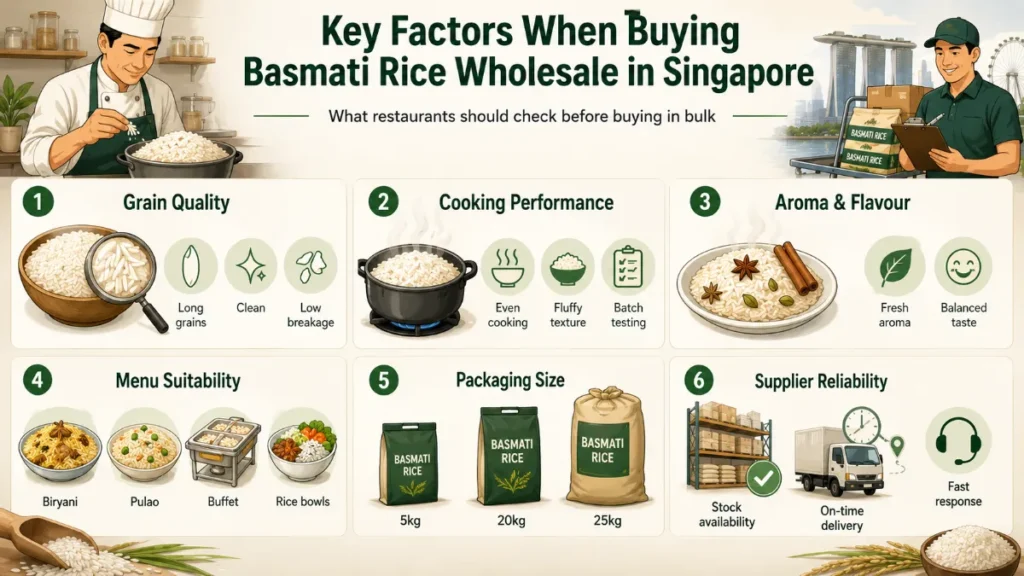
Key Factors When Buying Basmati Rice Wholesale in Singapore
1. Grain Quality
Grain quality is one of the most important factors for restaurants. High-quality basmati rice should have long, clean and consistent grains. Too many broken grains can affect the final appearance and texture of the dish.
For foodservice use, buyers should check whether the rice looks clean, smells fresh and cooks evenly. Restaurants preparing premium dishes may prefer higher-grade basmati rice for better visual appeal and customer experience.
Commercial buyers can also refer to recognised standards such as the Codex Standard for Rice when considering rice quality factors such as product type, quality, hygiene, contaminants and packaging requirements.
2. Cooking Performance
A good basmati rice supplier should provide rice that performs reliably in real kitchen conditions. Restaurants do not cook rice in small household portions. They often prepare large batches for lunch service, dinner service, catering orders or buffet lines.
The rice should cook evenly and remain fluffy. It should not become too sticky, too dry or too soft. Before placing a large wholesale order, restaurants should test samples using their own kitchen method.
3. Aroma and Flavour
The aroma of basmati rice can make a strong difference to the customer experience, especially for biryani, pulao and curry-based meals.
A quality basmati rice should have a clean, pleasant smell before and after cooking. The flavour should support the dish without overpowering the spices, curry or side ingredients.
4. Suitability for Menu Items
Different restaurants use basmati rice in different ways. A biryani restaurant may need rice with excellent elongation and grain separation. A catering business may need rice that holds well for longer service periods. A retail shop may need smaller consumer-friendly packs.
Common uses include:
- Biryani
- Pulao
- Curry rice
- Rice bowls
- Buffet rice
- Catering trays
- Retail grocery shelves
- Indian and Pakistani food menus
If rice is paired with masala, curry mixes or whole spices, restaurants may also want to source from an Indian spices supplier in Singapore to keep procurement more convenient.
5. Packaging Size
When buying bulk basmati rice in Singapore, packaging size matters. Restaurants and caterers often prefer larger packs because they are more practical for high-volume use.
Dashmesh lists basmati rice products in multiple pack sizes, including foodservice options such as 20kg and 25kg packs across selected products. Its Bulk Items category also includes rice, spices, lentils and other essentials for restaurants and retailers.
Large packs can help reduce ordering frequency and support smoother stock planning. Smaller packs may be better for retail shelves, trial orders or businesses with lower usage.
6. Supplier Reliability
A restaurant cannot afford frequent stock issues. If a rice supplier cannot deliver consistently, it can affect menu planning and kitchen operations.
When choosing a basmati rice wholesale supplier in Singapore, restaurants should consider product availability, delivery reliability, response time, rice brand range, ability to support bulk orders, clear quotation processes and product knowledge.
A broader Indian grocery supplier in Singapore can also help businesses source related essentials such as lentils, nuts, spices, flour, snacks and ready-to-eat foods from one place.
Popular Basmati Rice Options for Singapore Buyers
Restaurants, retailers and foodservice buyers may choose from different basmati rice brands depending on quality preference, budget and usage.
Dashmesh’s Basmati Rice category includes options from brands such as Daawat, Lal Qilla, Temasek Gold, Royal King and Malika Gold.
For foodservice buyers, selected larger-pack options include:
- Lal Qilla Majestic Basmati Rice 20kg
- Daawat Select Basmati Rice 1kg and 5kg
- Malika Gold Premium Basmati Rice 2kg and 5kg
The Daawat Select product page states that the rice is suitable for biryani and available in 1kg, 5kg and 25kg packets and cartons. Lal Qilla Majestic is described as 100% pure traditional basmati rice with delicate texture, flavour and aroma.
Why Restaurants Buy Basmati Rice in Bulk
Buying basmati rice wholesale offers several practical advantages for food businesses.
First, it helps with cost control. Restaurants can manage ingredient costs better when they purchase rice in larger quantities instead of buying small retail packs frequently.
Second, it supports consistency. When restaurants use the same rice regularly, kitchen staff can standardise water ratios, cooking times and portion sizes.
Third, it improves stock planning. Bulk purchasing helps reduce last-minute shortages, especially during weekends, festive seasons and catering peaks.
Restaurants that want to review purchasing more broadly can also explore Dashmesh’s guide on restaurant food costs and its article on bulk ordering best practices.
How Restaurants Should Test Basmati Rice Before Bulk Ordering
Before committing to a large wholesale order, restaurants should test the rice properly. A simple kitchen test can reveal whether the rice suits the menu.
A practical testing process includes:
- Cook the rice using your usual kitchen method
- Check the aroma before and after cooking
- Observe grain length and separation
- Test texture after resting
- Pair it with your actual curry, biryani masala or gravy
- Measure cooked yield and portion output
- Check how well it holds during service
This helps restaurants compare rice based on real performance instead of packaging claims alone. It also allows chefs to confirm whether a rice product works for their cooking equipment, batch size and service style.
Storage Tips for Bulk Basmati Rice
Proper storage is essential after buying basmati rice in bulk. Rice should be kept in a cool, dry and clean storage area. It should be protected from moisture, pests and strong-smelling ingredients.
The Singapore Food Agency recommends storing dried and preserved foods in a cool, dry place, noting that warm and humid conditions can cause dried food to turn mouldy or rancid faster. SFA also advises transferring loose or unused contents of opened packages into airtight containers.
Restaurants should also follow a first-in, first-out system. This helps maintain freshness and prevents older stock from being forgotten in storage.
Choosing the Right Basmati Rice Supplier in Singapore
The best supplier is not only the one with the lowest price. Restaurants should look for a supplier that understands foodservice needs and can provide reliable support.
A good wholesale rice supplier in Singapore should offer:
- A strong range of basmati rice products
- Suitable bulk packaging
- Competitive pricing
- Consistent availability
- Prompt delivery
- Clear product information
- Responsive customer service
- Access to related grocery and foodservice essentials
For businesses that also need spices, lentils, nuts, flours, frozen items, dairy and snacks, working with a wider food supplier in Singapore can simplify procurement and reduce the number of vendors needed.
Final Thoughts
Choosing basmati rice wholesale Singapore is an important decision for restaurants, caterers, hotels and retailers. The right rice can improve dish quality, support kitchen consistency and help businesses manage costs more effectively.
Restaurants should look beyond price alone. Grain quality, aroma, cooking performance, packaging size and supplier reliability all matter. By testing samples, comparing options and working with a trusted wholesale supplier, food businesses can choose basmati rice that fits their menu and customer expectations.
For businesses looking for basmati rice, bulk rice products and Indian grocery supply in Singapore, Dashmesh offers a wide range of rice options suitable for foodservice and retail needs.
Frequently Asked Questions

What is the best basmati rice for restaurants?
The best basmati rice for restaurants depends on the dish. Biryani usually needs long-grain rice that stays separate and absorbs flavour well. Curry rice and buffet rice may need rice that holds texture during service. Restaurants should test samples before bulk ordering.
Where can I buy basmati rice wholesale in Singapore?
Restaurants, caterers and retailers can buy basmati rice from wholesale food suppliers in Singapore. Dashmesh has a dedicated basmati rice category with multiple brands and pack sizes for different business needs.
Why do restaurants buy basmati rice in bulk?
Restaurants buy basmati rice in bulk to manage costs, maintain consistent supply and support high-volume cooking. Bulk packaging is also more practical for kitchens that use rice daily.
What should I check before choosing a basmati rice supplier?
Check grain quality, aroma, cooking results, pack size, price, delivery reliability and stock availability. A good supplier should be able to support regular orders and provide clear product information.
Is basmati rice suitable for biryani?
Yes. Basmati rice is widely used for biryani because it has long grains, a fragrant aroma and a fluffy texture when cooked properly.
How should restaurants store bulk basmati rice?
Restaurants should store bulk basmati rice in a cool, dry place away from moisture, pests and strong odours. Once opened, rice should be transferred to clean airtight containers where practical. A first-in, first-out system should also be used to keep stock rotation consistent.