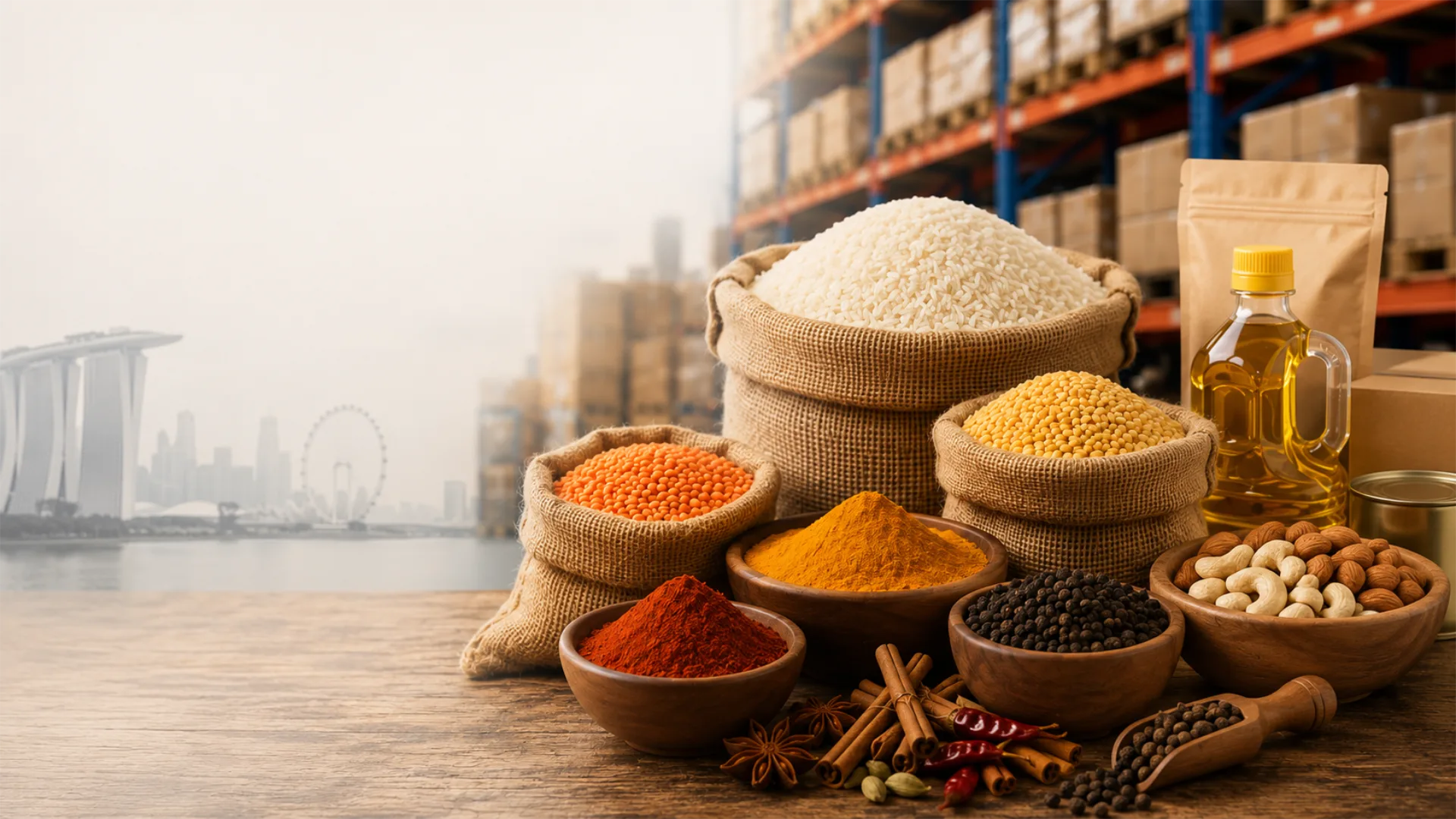

Singapore’s food and beverage industry runs on bold, complex flavours, and at the heart of many beloved dishes lies an ancient culinary tradition. Indian spices have shaped kitchens across the globe for centuries, and in Singapore’s competitive F&B landscape, sourcing them correctly can mean the difference between a dish that merely satisfies and one that truly captivates.
Whether you’re running a hawker stall, managing a restaurant kitchen, or scaling a food production operation, understanding how to source, evaluate, and purchase wholesale indian spices is a critical business skill. The right supplier relationship ensures consistent quality, competitive pricing, and a reliable supply chain that keeps your kitchen running without interruption.
This guide is designed specifically for F&B operators who already have foundational knowledge and are ready to sharpen their wholesale procurement strategy. You will discover the most essential spices used in Singaporean and Indian cuisine, key quality benchmarks to look for, trusted wholesale sourcing options available locally, and practical tips for managing spice inventory effectively. By the end, you will have a clear, actionable framework to make smarter purchasing decisions for your business.
Why Indian Spices Power Singapore’s F&B Industry
Singapore’s food and beverage industry runs on Indian spices. With one of Southeast Asia’s most diverse culinary landscapes, the city-state draws daily on turmeric, cumin, coriander, cardamom, and chilli across thousands of hawker stalls, full-service restaurants, and food manufacturing facilities. The South Asian diaspora has made dishes like fish head curry, biryani, and roti prata staples of the national food identity, but the reach of Indian spices extends well beyond ethnic cuisine. Malay rendang, Peranakan curries, and even commercial seasoning blends depend on the same core spice inputs, making Indian spices a structural ingredient category rather than a niche import.
The supply rationale is equally compelling. India cultivates roughly 75 of the 109 spice varieties recognised by the ISO, cementing its position as the world’s largest producer, consumer, and exporter of spices. No other origin country comes close to matching that range. For Singapore-based wholesale buyers, this means a single sourcing relationship with an India-linked supplier can cover the full spectrum of kitchen requirements, from Guntur chilli and high-curcumin turmeric to green cardamom and sortex-grade cumin. As trade data on high-demand Indian products in Singapore confirms, Indian spices sit alongside rice and pulses as products in strong daily demand across the city-state’s HoReCa and retail sectors.
The export numbers reinforce the scale of this trade corridor. India’s spice exports reached a record USD 4.72 billion in FY 2024-25, reflecting sustained global appetite for Indian-origin spices. Southeast Asia is emerging as a particularly active growth zone. Current export destination data shows Thailand holding a 3.51% value share of Indian spice exports in 2024-25, placing it among the fastest-growing recipient markets alongside the UAE. Singapore, sharing the same regional import infrastructure and similar culinary demand drivers, is well positioned to deepen its role within this corridor.
Zooming out to the global picture, the herbs and spices market is valued at USD 184.1 billion in 2026 and projected to reach USD 262.3 billion by 2036, growing at a 3.6% CAGR. Spices account for 57.5% of that total segment, underlining the category’s commercial weight. For F&B operators in Singapore, these figures are not abstract. Reliable wholesale supply of Indian spices directly determines menu cost stability, kitchen throughput, and the consistency of packaged food output. Procurement gaps, whether from poor stock management or inconsistent supplier quality, translate into real operational disruption. Businesses that secure verified, high-volume supply relationships treat Indian spices not as a commodity purchase, but as a critical input requiring the same discipline applied to any core ingredient.
What Makes Indian Spices Different: Quality, Certification, and Sourcing
India cultivates 75 of the 109 spice varieties recognised by the ISO, more than any other country on earth. That dominance is built on extraordinary agro-climatic diversity: Kerala’s humid Western Ghats produce black pepper and cardamom with aromatic profiles that competing origins simply cannot replicate, while Andhra Pradesh’s chilli belt delivers the heat intensity and colour pigmentation that define Guntur and Teja varieties globally. For B2B buyers, this diversity is both an opportunity and a sourcing challenge. Quality tiers vary substantially across growing regions, processing facilities, and exporters. Distinguishing commodity-grade product from export-grade requires active due diligence, not assumptions based on country of origin alone.
Quality Tiers and Premium Grades That Matter in B2B Trade
The price and performance gap between commodity and export-grade product is most visible in high-value categories. High-curcumin turmeric, sourced from Erode in Tamil Nadu or Nizamabad in Telangana, commands documented premiums over standard powder because curcumin content directly affects colour yield and functional properties in food manufacturing. Sortex-cleaned cumin, traded primarily through Unjha in Gujarat, is a distinct product tier from field-run commodity; moisture levels, volatile oil content, and foreign matter tolerances are all graded and documented separately. Single-origin black pepper graded by ASTA colour units and volatile oil percentage serves gourmet and industrial applications where consistency across batches is non-negotiable. Green cardamom is graded by pod size, including 8mm, Bold, and Extra Bold classifications, with each tier targeting a different end-use and price point. Buyers sourcing for food manufacturing or regulated retail channels must request documented quality grades and full Certificate of Analysis with numeric results, not pass/fail summaries.
Certification Frameworks Are Now a Baseline, Not a Differentiator
The certification stack required for international B2B spice trade has consolidated into a non-negotiable minimum. Exporting Indian spices requires compliance across IEC, GST, FSSAI, APEDA or Spices Board CRES registration, phytosanitary certificates, ISO 22000, and HACCP as standard. Ethylene oxide and pesticide-residue testing protocols have tightened considerably following EU market alerts, with MRL frameworks under EC 396/2005 applying limits that are significantly stricter than domestic Indian standards. Leading export-grade suppliers now conduct 200 to 500 compound pesticide panel testing through NABL-accredited laboratories before container dispatch. Suppliers unable to demonstrate this level of compliance face real risk of port rejection or delisting from regulated retail channels. For Singapore-based buyers, verifying the full certification stack before committing to a supplier is basic risk management, not optional due diligence.
Halal Certification and Singapore’s F&B Reality
Singapore’s food service environment makes halal certification a sourcing prerequisite rather than a preference. Restaurants, institutional caterers, hotel kitchens, and packaged food manufacturers operating in halal-certified or Muslim-serving segments cannot accept supply from unverified sources, regardless of price or availability. Buyers sourcing spices for these channels must confirm halal certification status at the supplier level before placing orders. A competitive wholesale partner operating in Singapore should already hold or work directly with halal-certified supply chains, removing the verification burden from the buyer and ensuring uninterrupted supply into regulated channels.
The Sourcing Advantage of Established Regional Wholesalers
Ad-hoc import arrangements carry hidden costs that rarely appear in the initial price comparison. Inconsistent quality across shipments, incomplete documentation, lead time variability, and minimum order requirements that do not suit Singapore’s mid-volume F&B market all erode the apparent savings. Established regional wholesalers serving Southeast Asian trade corridors bring verified supplier relationships, batch-level traceability, and the compliance documentation that regulated buyers require. For Singapore’s restaurants, retailers, and food manufacturers, sourcing through a specialist wholesaler with deep Indian grocery expertise means consistent access to export-grade product, reliable certification coverage including halal, and volume flexibility suited to local business requirements.
Cumin (Jeera)
Cumin earns its place as one of the highest-turnover spice SKUs in Indian wholesale for good reason. Its applications span biryanis, dal tadkas, curry bases, spice rubs, and cumin-forward blends including garam masala and chaat masala, meaning restaurant operators and food manufacturers consume it at significant volume and frequency. Gujarat and Rajasthan together account for over 90% of India’s cumin production, with Gujarat contributing approximately 58% and Rajasthan approximately 42%. Seeds from these regions are prized for uniform size, strong aroma, and high essential oil content, characteristics that matter when flavour consistency is a kitchen priority.
Quality grading is the first decision point for any B2B buyer. Sortex-cleaned cumin is the benchmark grade for food manufacturing and high-volume food service use. Sortex cleaning refers to optical machine-sorting that removes foreign matter, stones, and discoloured grains to achieve purity levels of 99% to 99.9% depending on buyer specification. Export-grade whole cumin typically carries a maximum moisture content of 9% and admixture tolerance of 1%. The Singapore 99 export quality grade is actively traded in bulk containers, with 24-tonne loads packed into 960 bags of 25 kg each being a standard shipment format. For B2B buyers at restaurants and manufacturing facilities, specifying sortex-cleaned product upfront eliminates downstream quality issues in production.
The whole versus ground decision carries real operational consequences. Ground cumin holds a 46.4% share of global spice product formats, reflecting its convenience, but whole seeds retain volatile aromatic oils significantly longer. In Singapore’s tropical climate, heat and humidity accelerate oil degradation in pre-ground product, compressing shelf life and requiring tighter stock rotation. Buyers who procure whole cumin in bulk and grind in-house or on demand preserve those aromatic compounds far more effectively. For restaurant operators prioritising flavour consistency across high-volume output, this approach is a practical quality control measure, not simply a preference.
Turmeric (Haldi)
Turmeric is arguably the most commercially significant spice in the Indian pantry, and for B2B buyers, its value lies in one precise metric: curcumin content. Food manufacturers and functional food brands increasingly specify minimum curcumin percentages, typically in the 3–5% range, directly in purchase orders. Commodity-grade turmeric frequently falls below this threshold, making grade verification a non-negotiable step in procurement. The 2024 Codex standard for dried turmeric formalised minimum curcuminoid content requirements alongside moisture and ash limits, giving buyers a defensible benchmark to include in supplier specifications. Adulteration risk compounds the issue; turmeric powder can be spiked with synthetic dyes or lead chromate, making analytical screening and risk-based sampling essential for any serious B2B buyer.
Health-driven demand is reshaping the global turmeric market at scale. The global turmeric market is projected to reach USD 6.08 billion by 2032 at a CAGR of 7.45%, fuelled largely by nutraceutical and pharmaceutical applications targeting inflammation and immune support. Research into curcumin’s anti-inflammatory and antioxidant properties continues to accelerate, with functional food and beverage brands leveraging these associations as clean-label claims. This demand trajectory connects directly to India’s domestic spice market growth, which is projected to expand from USD 5.32 billion in 2025 to USD 9.07 billion by 2034, with turmeric contributing meaningfully to that momentum.
For Singapore restaurant operators, turmeric is a foundational workhorse across curry pastes, rendang bases, fish marinades, and nasi kuning. Inconsistent curcumin grades translate directly into colour variance, weakened aroma profiles, and dish replicability issues that compound across high-volume kitchen output. Bulk procurement at a verified curcumin grade protects both quality standards and cost predictability.
Storage discipline is equally critical. Singapore’s tropical humidity accelerates moisture absorption in turmeric powder, causing clumping, mould risk, and curcumin degradation. Buyers should specify airtight, multi-layer moisture-barrier packaging at the point of order and enforce a strict FIFO (first-in, first-out) stock rotation system to protect shelf life and ingredient performance across every batch.
Green Cardamom (Elaichi)
Green cardamom earns its reputation as the “Queen of Spices” through both its aromatic intensity and its commanding unit price. For B2B buyers, the most important procurement variable is pod grading. Export-grade green cardamom is classified by pod diameter, with bold-grade pods (7mm and above, including the premium Alleppey Green Extra Bold and Alleppey Bold designations) commanding the highest prices across hospitality and specialty retail channels. Medium and small grades serve everyday culinary applications, but operators supplying fine-dining Indian restaurants, specialty beverage bars, or premium retail shelves should specify bold-grade as the baseline. Understanding this grading hierarchy protects margin and ensures product quality matches the end-use context.
In Singapore’s F&B market, green cardamom sustains year-round, high-frequency demand across multiple cuisine segments. Its applications include masala chai, biryani, garam masala blends, South Indian filter coffee, kheer, halwa, and an expanding range of artisanal bakery and confectionery preparations. Few spices carry this kind of dual utility across both savoury and sweet preparations, which makes cardamom stockout risk particularly costly for any Indian or Southeast Asian restaurant operator.
The key quality indicator for green cardamom is volatile oil content, which should fall between 4 and 8 percent for export-grade product. This oil degrades rapidly when exposed to light, heat, and humidity, precisely the conditions that Singapore’s ambient climate presents year-round. Whole pods preserve volatile oil content and aroma intensity far longer than pre-ground formats, with properly stored whole pods maintaining quality for up to 24 months under cool, dry conditions. For commercial kitchens, whole-pod bulk procurement is therefore the operationally sound choice, delivering better flavour retention per unit cost compared to ground alternatives.
Dashmesh supplies green cardamom suited to both food service operations and retail repacking requirements, with consistent availability across bulk order cycles. For operators in Singapore who cannot afford a mid-service gap in this high-demand spice, supply reliability is as important as grade specification.
Black Pepper
Known as the “King of Spices,” black pepper has driven trade routes, colonial ambitions, and culinary traditions for centuries. Today it remains one of India’s most commercially vital spice exports and a core high-volume SKU for any serious B2B buyer in Singapore’s F&B sector. The global black pepper market was valued at approximately USD 4.88 billion in 2026, forecast to reach USD 7.44 billion by 2034 at a 5.42% CAGR, reflecting sustained demand across food processing, nutraceuticals, and commercial kitchens worldwide.
For procurement teams and food manufacturers, quality specification is non-negotiable. When sourcing at volume, buyers should define ASTA colour value and piperine content as contractual benchmarks. Piperine, the primary bioactive alkaloid responsible for black pepper’s pungency, typically ranges between 4% and 7% in commercial grades, with premium varieties exceeding that threshold. Moisture content between 500GL and 550GL is a further baseline requirement for accessing regulated export markets.
Origin matters significantly. Malabar and Tellicherry are the two benchmark Indian grades recognised across global trade. Tellicherry commands a consistent premium due to its larger berry size, classified at 4.25mm and above, and its higher piperine concentration, making it the preferred specification for premium restaurant accounts and packaged food applications. Malabar pepper remains the workhorse grade for high-volume blending and seasoning operations.
Black pepper’s cross-cuisine versatility makes it one of the most reliable turnover SKUs across Singapore’s diverse F&B landscape. Marinades, pepper sauces, spice rubs, and seasoning blends across Indian, Chinese, and Western menus all depend on consistent black pepper supply. For format decisions, whole peppercorns purchased in bulk and cracked or ground as needed deliver measurably superior flavour. Pre-ground pepper loses volatile aromatic compounds rapidly post-processing; whole peppercorns protect those compounds until the moment of use, preserving pungency through the full shelf cycle.
Coriander (Dhania)
Coriander occupies a unique position in Indian spice trade: it is simultaneously a high-volume commodity and a technically nuanced ingredient that rewards careful procurement decisions. Seeds and ground powder both serve as foundational inputs across curry powder blends, garam masala formulations, spice rubs, marinades, and seasoning mixes. For restaurant operators managing daily curry base production and for food manufacturers running large-scale blending operations, coriander consistently ranks among the highest-turnover spice SKUs in any given procurement cycle.
Whole vs. Split Seeds: A Distinction That Matters
B2B buyers sourcing coriander should specify seed format from the outset. Split coriander seeds from established Indian exporters are processed specifically to accelerate essential oil release during grinding, making them the preferred input for curry base manufacturing and spice powder production. Whole seeds, by contrast, retain their structural integrity and are suited to pickling applications, chutneys, and tadkas where visual presentation and gradual flavour release matter. Specifying grade and format at the RFQ stage prevents costly substitutions downstream.
Seasonality, Rajasthan, and Pricing Cycles
India is among the world’s largest coriander producers, with Rajasthan and Gujarat driving the majority of commercial output. The harvest window runs from February through June, creating a concentrated supply event that directly shapes annual pricing. Premium coriander sourced from Indian exporters reflects these seasonal rhythms; Q3 and Q4 prices typically rise as post-harvest stocks deplete. Procurement managers should negotiate forward contracts before the February harvest to lock in competitive rates.
Storage Realities for Singapore’s Climate
Ground coriander degrades quickly after milling as volatile oils dissipate. In Singapore’s humid equatorial conditions, this degradation accelerates further. Bulk buyers storing pre-ground coriander should insist on nitrogen-flushed or vacuum-sealed packaging, and maintain moisture levels below 10% throughout the storage cycle to preserve flavour integrity and extend functional shelf life.
Chili (Lal Mirch)
Chili powder is arguably the highest-turnover spice SKU in Singapore’s wholesale market, and its dominance traces directly to Indian origin. India accounts for over 36% of global chilli production, with Guntur in Andhra Pradesh standing as the country’s premier export origin. Guntur chillies are prized by food manufacturers, spice blenders, and commercial kitchens worldwide for their deep red colour, robust capsaicin content, and consistent batch-to-batch quality. The two most traded Guntur varieties in B2B channels are Teja S17, valued for extreme heat output, and Sannam 334, which delivers a balanced colour-to-heat ratio suited to everyday spice blend formulations.
In Singapore, Indian chilli powder crosses culinary boundaries in a way few spices do. It forms the base of Indian curry powders, the heat backbone of Malay sambal, and the colouring agent in Chinese-style chilli sauces and seasoning blends. That cross-cuisine versatility makes it a staple reorder line for restaurant operators, sauce manufacturers, and food processors operating across all three major culinary traditions.
For bulk buyers, two specifications must appear on every purchase order: ASTA colour value (measuring natural red pigment intensity) and Scoville Heat Units (SHU) (measuring capsaicin-based pungency). Byadgi chilli typically delivers 100 to 120 ASTA with a mild heat profile near 10,000 SHU, making it ideal for colour-forward applications. Guntur sits in the medium range for both parameters, while Teja exceeds 80,000 SHU for industrial applications. Food manufacturers operating to fixed recipes cannot afford to substitute varieties without verifying both figures, as the downstream impact on colour and heat profile is significant and measurable.
Storage discipline is equally critical. Chilli powder is highly hygroscopic and cakes rapidly in Singapore’s tropical humidity. Bulk operators storing more than a two-week supply should specify laminated foil bags with desiccant inserts to maintain powder integrity and prevent moisture-driven degradation.
Dried Ginger (Soonth)
Dried ginger, or soonth, is chemically distinct from its fresh counterpart in ways that matter directly to commercial formulation. When ginger rhizomes are dried, the primary bioactive compound gingerol undergoes dehydration, converting into shogaols, which carry significantly stronger pungency and a deeper, warmer heat signature. The bright citrus and floral volatile compounds present in fresh ginger largely dissipate during drying, leaving behind an earthier, more concentrated spice profile with a longer-lasting heat finish. This makes soonth the preferred format for masalas, dry rubs, spice blends, and instant curry mixes, where a stable, shelf-consistent heat is required rather than the fresh brightness that degrades quickly in processed applications.
The health-driven demand for ginger is accelerating meaningfully across global markets. Shogaols and gingerols are both documented for antioxidant, anti-inflammatory, and digestive properties, and this functional credibility is translating directly into product development activity. Wellness teas, digestive biscuits, immunity shots, and health beverage formulations are among the fastest-growing application categories incorporating dried ginger powder as a key active ingredient, not merely a flavour element.
For Singapore’s food manufacturing sector, dried ginger powder is an essential input across ready-to-eat meals, instant spice sachets, and convenience curry bases, segments growing alongside broader consumer demand for quality convenience foods.
Quality procurement requires attention to four key parameters: standardised gingerol and shogaol content for functional consistency, volatile oil percentage for flavour performance, moisture levels kept below 10% to prevent aflatoxin development and ensure shelf stability, and verified absence of aflatoxin contamination. Buyers supplying Singapore’s SFA-regulated market or sourcing for halal-certified product lines should require a batch-traceable Certificate of Analysis from their supplier as standard procurement practice.
Fenugreek, Mustard Seeds, and Cloves
Fenugreek (methi) seeds occupy a subtle but structurally important role in South Indian and Sri Lankan spice formulations. Their flavour profile sits at the intersection of mild bitterness and a distinctive maple-like sweetness, making them indispensable as a background note in commercial curry powders, sambar masalas, and pickle formulations. Unlike front-of-palate spices such as chili or cumin, fenugreek works beneath the surface, binding disparate flavour compounds into a cohesive whole. For B2B buyers supplying Indian and Sri Lankan restaurants in Singapore, fenugreek seeds should be treated as a consistent-volume SKU rather than a specialty item. Sourcing whole seeds in bulk and grinding to order preserves the essential oils responsible for that characteristic aroma.
Mustard seeds are among the highest-turnover wholesale spice items in Singapore’s Indian grocery and restaurant supply corridor. Both black and brown varieties are used extensively, with black mustard seeds delivering sharper heat and a more pungent finish while brown seeds offer a slightly milder, nuttier character. The tadka technique, where whole mustard seeds are dropped into hot oil until they pop and release their volatile compounds, forms the flavour foundation of South Indian rice dishes including lemon rice and coconut rice, as well as countless dal and sabzi preparations. Pickle brines also rely heavily on mustard seeds for both preservative properties and flavour depth.
Cloves command significant wholesale attention given their unit price and adulteration risk. Used whole in biryani spice mixes and garam masala blends, and ground for chai masalas, cloves are a premium procurement decision. Buyers should insist on lab-tested, certified stock from verified suppliers, as lower-grade supply chains carry documented risks of adulteration and essential oil extraction prior to sale, which strips the spice of its primary commercial value.
Across all three spices, the procurement principle is consistent: whole-format bulk purchasing with blending done closer to point of use significantly extends effective shelf life. In Singapore’s warm, humid conditions, ground spices lose aromatic intensity rapidly. Whole cloves retain potency for up to two to three years when stored in airtight packaging; their ground equivalent may lose meaningful essential oil content within six to twelve months. This operational detail directly affects the flavour quality delivered to end customers.
Spice Blends: The Fastest-Growing Format for Commercial Kitchens
Spice blends represent the single fastest-growing product segment within the global spice market, with multiple analyst projections pointing to strong compound annual growth through 2034. The Asia Pacific region alone accounts for 38.5% of global spice blend revenues, and the food processing application segment holds the largest share at 42.3%, confirming that commercial kitchens rather than household consumers are the primary demand engine behind this growth. The drivers are consistent across markets: operators want convenience, reproducibility, and reduced dependency on skilled kitchen labour to achieve consistent flavour results at scale.
For Singapore’s Indian restaurant and F&B segment specifically, the blends in highest day-to-day demand reflect the full range of subcontinental cooking traditions. Biryani masala requires precise layering of warm spices with exact heat levels to produce a consistent rice dish across service. Garam masala anchors North Indian curries and marinades, where even minor batch-to-batch variation is detectable by experienced diners. Curry powder remains a high-volume staple across hawker stalls and institutional catering alike. Sambar powder is non-negotiable for South Indian operators. Chaat masala drives both snack formats and street food menus. Tandoori marinade mix powers the clay-oven cooking segment across sit-down restaurants. Each of these blends must perform identically across every batch produced, which is a formulation and sourcing discipline, not simply a ratio question.
The operational case for sourcing pre-formulated blends from a wholesale partner rather than blending in-house is straightforward. It reduces kitchen prep time, eliminates the margin for error introduced by manual weighing across multiple single spices, standardises output across multi-outlet operations, and consolidates procurement from dozens of individual SKUs into a manageable purchase order. For high-volume caterers and food manufacturers, this simplification has direct cost and quality implications.
The critical caveat is that blend quality is entirely a function of the component spices used. A biryani masala formulated with low-ASTA chili, low-curcumin turmeric, and unsorted cumin will produce unreliable colour, heat, and aroma regardless of how precisely the ratio has been calibrated. The blend is only as consistent as its least-quality input.
Dashmesh supplies both individual Indian spice SKUs and blended formats suited to commercial kitchen use and retail repacking applications. B2B buyers can consolidate their full spice requirement, single-origin ingredients and ready-formulated blends, through a single certified wholesale partner operating from Singapore.
Halal-Certified Indian Spices: What Singapore’s F&B Market Requires
Singapore currently has 4,938 halal-certified F&B establishments, with certified outlet numbers growing consistently year-on-year from 2018 through 2022. For Indian spice wholesalers, this figure represents a concrete procurement obligation: every restaurant, caterer, hawker operator, and institutional food service provider within that certified pool must source their ingredients, including spices, exclusively from halal-certified suppliers. There is no flexibility on this point. A single non-certified input can invalidate an operator’s own halal status, making ingredient provenance a business-critical compliance issue rather than a purchasing preference.
Halal Certification Is Not Conferred by Ingredient Origin
A common misconception among buyers new to halal sourcing is that natural or plant-based ingredients are inherently halal. For spices, this is not the case. MUIS governs certification through multiple schemes that address the full supply chain: the Product and Whole Plant Scheme covers manufacturing and processing facilities, the Storage Facility Scheme covers warehouses and handling infrastructure, and the Endorsement Scheme covers imported products carrying foreign halal certificates. Each layer reflects a specific compliance risk. An Indian spice supplier may process genuinely permissible raw materials while still failing halal certification if their facility handles non-halal products on shared lines, uses non-halal processing aids, or stores certified and non-certified stock without physical segregation.
Cross-Contamination: The Most Common Compliance Failure
Cross-contamination during bulk spice processing is the point at which halal compliance most frequently breaks down. Grinding, blending, and packaging lines that handle multiple product categories create contamination exposure at every stage. Buyers sourcing Indian spices in commercial volumes should ask suppliers specifically whether halal-certified lots are processed on dedicated lines, what the cleaning and changeover protocols are between production runs, and whether halal storage is physically separated from non-certified stock. These are not unreasonable due-diligence questions; they reflect exactly what MUIS auditors examine during certification and renewal assessments.
Dashmesh’s Position in Singapore’s Halal Supply Chain
Dashmesh’s halal-certified product range addresses this compliance requirement directly, covering both individual spice SKUs and blended formats under a single certification framework. For Singapore’s Muslim F&B operators, this means consolidated sourcing from a single wholesale supplier rather than managing multiple certified vendor relationships across product categories.
Halal Certification as Commercial Baseline
For retail buyers and supermarket chains, stocking halal-certified Indian spices has shifted from a premium positioning decision to a commercial baseline. Consumer demand for certified packaged products is well-documented across Singapore’s retail food market, and the halal mark is increasingly viewed by non-Muslim consumers as a proxy for quality assurance and ethical sourcing standards. MUIS participation in the FHA-Food and Beverage 2025 trade event with a dedicated halal compliance seminar reflects the official direction: certification is expected infrastructure, not exceptional differentiation.
Buying Indian Spices in Bulk: What B2B Buyers Need to Know
Procurement decisions at the bulk level carry consequences that retail-scale buying simply does not. For Singapore-based F&B operators and food retailers sourcing Indian spices in volume, operational discipline across packaging selection, storage, supplier agreements, and goods receipt can meaningfully protect both margin and product quality.
1. Match Your Packaging Format to Your Consumption Rate
Bulk Indian spices are available in a range of formats, from 500g retail packs through to 1kg, 5kg, and 10kg intermediate trade packs, up to 25kg trade bags and 50kg sacks that represent the standard trade unit for wholesale channels. The instinct to order the largest available format to secure the lowest per-kilogram price is understandable, but it frequently backfires in Singapore’s operating environment. Every time an oversized container is opened, it is exposed to ambient humidity and heat, both of which accelerate the oxidation of volatile aromatic compounds. For moderate-volume kitchens, a 25kg sack of ground cumin that takes six weeks to use will deliver noticeably degraded aroma by the final portion. Matching format to weekly consumption, even at a marginally higher unit cost, consistently produces better culinary outcomes and less waste.
2. Apply Disciplined Shelf Life Management in Tropical Conditions
Singapore’s climate, with year-round temperatures above 28°C and relative humidity regularly exceeding 80%, creates challenging storage conditions for any spice inventory. Best practice requires airtight containers, storage areas with controlled humidity, and temperatures ideally maintained below 25°C. Beyond physical storage, stock rotation discipline is non-negotiable. A strict first-in, first-out (FIFO) system ensures that older stock is drawn down before newly received deliveries, preventing layering of fresh stock over ageing product. Buyers should also schedule regular sensory audits of their spice inventory: aroma loss is the earliest indicator of quality decline, followed by colour fade and, in humid conditions, clumping. Ground spices are particularly vulnerable, with practical shelf life ranging from six to twelve months under good storage conditions, while whole spices typically retain quality for two to four years.
3. Manage Price Volatility Through Forward Supply Agreements
Price volatility is a structural feature of the Indian spice trade, not an occasional disruption. Cumin prices are closely tied to rainfall patterns in Rajasthan and Gujarat. Cardamom values fluctuate sharply with crop disease incidence in Kerala. Black pepper, which reached retail prices of approximately Rs 750 to Rs 950 per kilogram in India in 2026, commands premiums of four to five times that figure in high-specification export markets, with quality grading and moisture compliance determining which price tier a batch accesses. For B2B buyers, the practical response is to establish forward supply agreements with a reliable wholesale partner. These arrangements do not eliminate price exposure entirely, but they provide partial insulation against short-term commodity swings and ensure supply continuity during peak-demand periods.
4. Evaluate MOQs Against Local Wholesale Versus Direct Import
Minimum order quantities vary considerably by spice type and packaging format. Direct import arrangements from Indian exporters often require full-container or large pallet commitments that suit high-volume processors but are impractical for mid-scale restaurants or specialty retailers. A Singapore-based wholesale supplier typically offers more accessible entry points, consolidated invoicing across multiple spice lines, and local logistics that reduce lead times from weeks to days. For buyers managing tight storage space or variable menu cycles, the operational flexibility of sourcing through a local wholesale partner frequently outweighs the marginal per-unit cost differential versus direct import.
5. Verify Quality at the Point of Receipt
Accepting a bulk spice delivery without inspection is a commercially avoidable risk. At goods receipt, buyers should check for correct colour grade, which signals variety authenticity and processing quality; aroma intensity, which confirms volatile oil content is intact; absence of foreign matter, including moisture clumping, debris, or evidence of pest activity; and full packaging integrity, with no tears, compromised seals, or moisture ingress. These checks take minutes and protect against incorporating substandard stock into production. Buyers working with suppliers who hold recognised certifications such as FSSAI, ISO, or HACCP will generally find receipt inspections confirm compliance rather than reveal problems, but the inspection practice remains important regardless of supplier credentials.
Why Source Indian Spices Through a Singapore Wholesale Supplier
Sourcing Indian spices directly from origin requires navigating international freight economics, customs documentation, Singapore Food Agency compliance requirements, and minimum order quantities dictated by container load logistics. For a mid-sized restaurant group or independent grocery retailer, these barriers make direct India procurement impractical. A Singapore-based wholesale supplier absorbs this entire layer of operational complexity, presenting buyers with a consolidated product range, verified certifications, and locally held inventory that is ready to fulfil orders at commercially practical quantities.
Shorter Lead Times and Flexible Replenishment
Local wholesale partnerships deliver a supply chain advantage that direct import simply cannot match: the ability to top up inventory quickly. International freight from India typically involves lead times measured in weeks, subject to port congestion, documentation delays, and seasonal freight variability. A Singapore-based wholesale partner holds stock on the island, enabling replenishment cycles aligned to kitchen and production schedules rather than shipping timetables. This operational flexibility is especially valuable for spice blends, which are the fastest-growing product segment in B2B spice trade, and for high-turnover SKUs like turmeric, cumin, and chili where running out of stock carries direct revenue consequences.
A Trusted Local Supplier: Dashmesh at 27 Penjuru Lane
Dashmesh operates from 27 Penjuru Lane, AIMS Building, supplying Indian groceries and spices in bulk to restaurants, retailers, and institutional buyers across Singapore. Its product range covers individual spices, blended formats, basmati rice, and ready-to-eat products, supported by halal certification and competitive wholesale pricing. For F&B operators serving Singapore’s diverse market, a single supplier relationship that spans this breadth of SKUs reduces procurement overhead and consolidates quality accountability in one verified source.
Supplier Verification as a Risk Management Tool
The B2B spice trade rewards consistency. A sourcing partner who can demonstrate certification credentials, product traceability, and reliable replenishment removes meaningful operational risk from any food business’s supply chain. As Southeast Asia’s share of Indian spice exports grows, evidenced by Thailand reaching a 3.51% value share in 2024 to 2025, regional supply infrastructure is deepening. Singapore buyers who anchor that sourcing through an established local wholesale partner are positioned to benefit from this momentum without absorbing the risks of managing direct international supplier relationships themselves.
Sourcing Indian Spices in Singapore: Key Takeaways for F&B Buyers
Five decision points separate profitable spice procurement from costly operational friction. For Singapore F&B buyers working at volume, these takeaways consolidate the critical principles covered throughout this guide.
- Prioritise certified suppliers without compromise. APEDA, FSSAI, and ISO compliance are baseline requirements for Singapore’s regulated market, not differentiators. Halal certification is equally non-negotiable for the city-state’s substantial certified F&B sector. Suppliers holding these credentials provide documented traceability that protects your business during audits and sourcing reviews.
- Match spice format to your actual use case. Whole spices bulk-purchased and ground in-house retain volatile oils significantly longer than pre-ground alternatives, a critical advantage in Singapore’s tropical humidity. Where throughput justifies it, in-house processing delivers measurable flavour and shelf-life gains.
- Know the grade parameters before ordering. Curcumin content governs turmeric’s value in functional applications; ASTA colour units determine chili’s visual and flavour yield; sortex grade signals cumin’s purity and consistency. These specifications directly affect cost per dish and finished product quality.
- Work with a local wholesale partner. A Singapore-based supplier offers accessible MOQs, consolidated invoicing, SFA-compliant documentation, and reliable local logistics that direct import arrangements rarely match.
- Contact Dashmesh at 27 Penjuru Lane, AIMS Building, Singapore for wholesale pricing and full availability across their certified Indian spice and grocery range.
Conclusion
Sourcing wholesale Indian spices in Singapore is far more than a purchasing decision. It is a strategic investment in the quality, consistency, and reputation of your F&B business. To recap the key takeaways: understanding which spices are essential to your cuisine gives you a strong procurement foundation; evaluating suppliers on quality certifications, freshness, and reliability protects your kitchen from costly disruptions; negotiating smart wholesale terms improves your margins; and building long-term supplier relationships ensures priority access and stable pricing.
Your next step is straightforward. Audit your current spice inventory, identify your highest-volume needs, and begin conversations with reputable wholesale suppliers in Singapore’s Little India district or established spice trading networks.
The finest dishes begin long before they reach the plate. Start with better sourcing today, and let exceptional flavour become your competitive advantage.