

Introduction
Procuring food provisions for a vessel requires more than preparing a shopping list. Ship chandlers and maritime procurement teams must consider crew size, voyage duration, storage capacity, dietary requirements, product shelf life and the vessel’s receiving schedule.
Dry, chilled and frozen products also require different approaches to packaging, transportation and onboard storage. A carefully planned order can help prevent shortages, reduce unnecessary waste and ensure that the galley has suitable provisions throughout the voyage.
Dashmesh supports Singapore’s maritime supply sector by providing ship chandlers with essential food provisions, including rice, lentils, spices and canned goods. You can learn more about the company’s maritime and business supply segments on the Dashmesh Our Business page.
This guide explains seven proven strategies for planning and sourcing ship chandling provisions in Singapore.
The 7 Proven Procurement Strategies
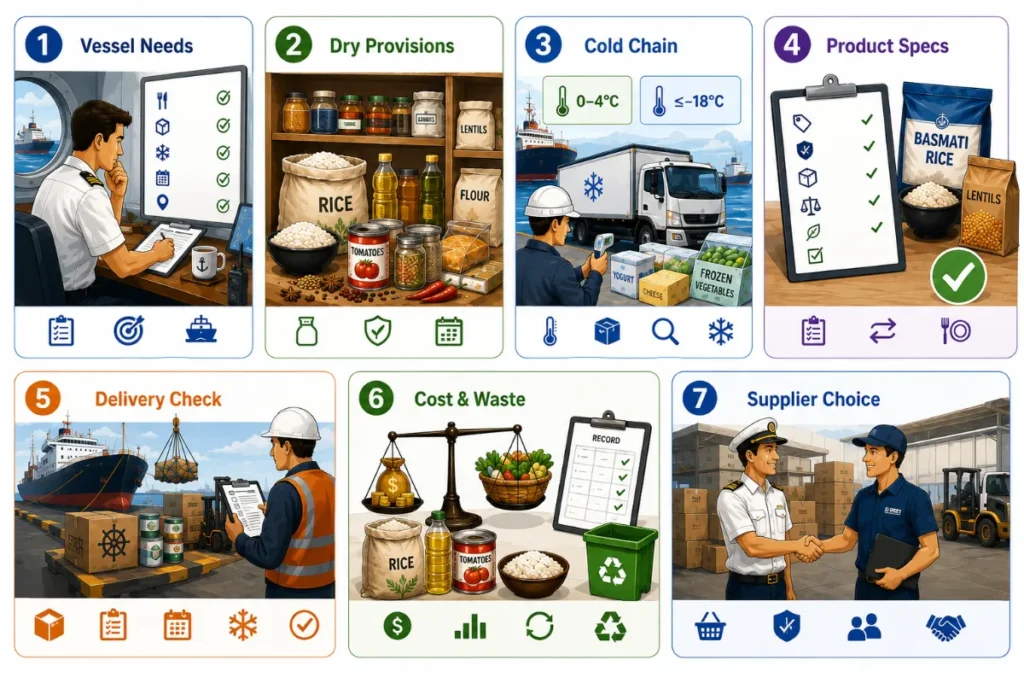
- Define the vessel’s requirements before ordering
- Plan dry provisions around usage and storage
- Protect the cold chain for chilled and frozen supplies
- Use clear product specifications and substitution rules
- Coordinate delivery and inspect provisions carefully
- Control procurement costs and reduce food waste
- Choose a dependable provisions supplier
1. Define the Vessel’s Requirements Before Ordering
Every vessel has different provisioning needs. A short regional voyage may require only a limited replenishment, while a longer voyage may need a comprehensive order covering several food categories.
Before requesting a quotation, establish:
- Number of crew members
- Expected voyage duration
- Current inventory onboard
- Planned menu cycle
- Dietary and religious requirements
- Allergies and ingredient restrictions
- Available dry-storage capacity
- Chiller and freezer capacity
- Preferred product brands and pack sizes
- Required delivery window
- Vessel location and receiving arrangements
This information allows the supplier to check stock availability and prepare a more accurate quotation.
It also reduces two common problems: ordering too little for the voyage and ordering more than the vessel can store or consume.
Review Existing Inventory
An onboard inventory check should be completed before submitting the order.
The review should identify:
- Products already available
- Quantities remaining
- Products approaching expiry
- Frequently used staples
- Slow-moving products
- Damaged or unsuitable stock
- Emergency reserve quantities
The procurement list can then be based on actual requirements rather than estimates alone.
For operational and regulatory information relating to Singapore’s port, buyers may also consult the Maritime and Port Authority of Singapore’s Port Information resources.
2. Plan Dry Provisions Around Usage and Storage
Dry provisions form the foundation of many vessel inventories because they usually have longer shelf lives and can be used across a broad range of meals.
Common dry provisions include:
- Rice
- Lentils and pulses
- Flour
- Whole and ground spices
- Canned foods
- Cooking oil
- Pickles and pastes
- Nuts and dried fruits
- Snacks
- Tea, coffee and powdered beverages
Dashmesh carries several categories that may support maritime provisioning, including rice, lentils and spices.
Select Suitable Pack Sizes
Large packs may be practical for frequently used ingredients such as rice, flour and lentils. However, the cheapest price per kilogram does not automatically make the largest pack the best choice.
Consider:
- How quickly the product will be used
- Whether the opened pack can be resealed properly
- Available storage space
- Risk of moisture exposure
- Risk of contamination after opening
- Ease of moving the pack into storage
- Galley preparation quantities
Smaller packs may be more suitable for ingredients that are used occasionally. They can also reduce the amount exposed each time a product is opened.
Check Packaging and Remaining Shelf Life
Before accepting dry provisions, inspect:
- Bags and cartons for tears
- Seals for signs of tampering
- Cans for dents, swelling or leakage
- Packaging for moisture damage
- Labels for product information
- Expiry or best-before dates
- Batch information where available
Products should be arranged so that stock with the earliest expiry date is used first.
Account for Singapore’s Climate
Dry foods should be kept away from moisture, excessive heat and pests. Packaging that performs well in a normal storeroom may deteriorate if exposed to humid conditions or placed directly on damp surfaces.
Buyers should therefore consider packaging integrity and the vessel’s storage conditions when choosing products.
3. Protect the Cold Chain for Chilled and Frozen Supplies
Chilled and frozen products require careful temperature control from storage through transportation and delivery.
Depending on the vessel’s requirements, these categories may include:
- Dairy products
- Cheese and yoghurt
- Frozen vegetables
- Frozen breads
- Frozen prepared foods
- Chilled pastes and sauces
- Selected convenience products
Relevant products can be reviewed within Dashmesh’s chilled and frozen category.
Follow Appropriate Transport Temperatures
Singapore Food Agency guidance states that chilled food should be maintained at 4°C or below during transportation, with its core temperature not exceeding 7°C. Frozen food should be maintained at −18°C or below, with its core temperature not exceeding −12°C. Chilled and frozen products should be moved promptly into suitable storage after delivery.
The official temperature guidance is available from the Singapore Food Agency’s guide to transporting frozen and chilled food.
Confirm Onboard Storage Capacity
Before ordering chilled or frozen products, check:
- Available chiller and freezer space
- Whether equipment is functioning correctly
- Size and shape of the products
- Expected consumption rate
- Time required to transfer the goods
- Remaining shelf life of chilled products
- Whether large packs can be used without repeated thawing
A large frozen pack may appear economical but could create waste if the galley must thaw more food than it can use.
Inspect Temperature-Sensitive Products
During receiving, check for:
- Damaged or wet cartons
- Broken packaging
- Signs of partial thawing
- Excessive ice formation
- Products that are no longer sufficiently cold
- Missing storage instructions
- Inadequate remaining shelf life
Any concern should be documented before the products are moved into onboard storage.
4. Use Clear Product Specifications and Substitution Rules
Vague descriptions create avoidable errors.
An order that says only “rice,” “dal” or “spices” may not give the supplier enough information to identify the correct product.
Each item should specify:
- Product name
- Variety or type
- Preferred brand
- Pack size
- Number of packs
- Country of origin, where relevant
- Storage category
- Required remaining shelf life
- Dietary or allergen restrictions
- Acceptable alternative
For example, an order for basmati rice should identify the preferred variety, pack size and quantity rather than simply requesting “rice.”
Agree on Substitutions in Advance
Stock availability can change, particularly for large or short-notice orders.
The buyer should state whether substitutions are:
- Allowed without additional approval
- Allowed only within the same brand
- Allowed if the pack size changes
- Allowed within an agreed price range
- Allowed only after written approval
- Not permitted for specific products
A first-choice product and an approved alternative can be listed for important staples.
Products linked to allergies, religious requirements or specialised diets should not be replaced without explicit approval.
Consider Ready-to-Eat Options
Selected ready-to-eat foods may provide additional flexibility for particular vessel requirements.
However, buyers should still evaluate:
- Serving size
- Storage requirements
- Preparation instructions
- Ingredient and allergen information
- Remaining shelf life
- Suitability for the crew’s menu
Convenience should not replace proper menu and nutrition planning, but these products may supplement the main provisions order.
5. Coordinate Delivery and Inspect Provisions Carefully
Provisioning is time-sensitive. A change in vessel arrival, berthing or departure may affect the receiving window.
When placing an order, provide:
- Vessel name
- Vessel or agent contact details
- Expected location
- Delivery date
- Delivery window
- Latest acceptable delivery time
- Receiving contact
- Access or transfer instructions
- Notice of schedule changes
Complex orders covering dry, chilled and frozen categories should be submitted as early as operationally possible.
Additional preparation time may be required to:
- Check product availability
- Source requested pack sizes
- Arrange alternatives
- Separate temperature categories
- Prepare delivery documentation
- Coordinate the delivery vehicle
Nominate a Receiving Representative
A nominated crew member or receiving representative should inspect the order before accepting it.
Check the following areas:
Quantity
Confirm that the number of bags, cartons, cases and individual units matches the delivery documentation.
Product specifications
Check the product name, brand, variety and pack size against the approved order.
Packaging
Look for tears, leaks, broken seals, wet cartons or damaged containers.
Product dates
Check expiry and best-before dates, especially for chilled items.
Chilled and frozen condition
Ensure that temperature-sensitive products arrive appropriately cold and show no obvious signs of unsuitable handling.
Substitutions
Confirm that all replacements were approved.
Shortages, damage or incorrect products should be recorded immediately. Photographs and clear notes can help resolve discrepancies more efficiently.
6. Control Procurement Costs and Reduce Food Waste
The lowest purchase price does not always produce the lowest overall provisioning cost.
A cheaper product can become more expensive if it:
- Arrives in an unsuitable pack size
- Has insufficient remaining shelf life
- Creates excessive waste
- Is not accepted by the galley
- Requires a replacement order
- Does not match the requested specification
Cost control should therefore consider the usability and total value of the order.
Compare Products Fairly
Compare:
- Cost per kilogram or litre
- Usable quantity
- Remaining shelf life
- Pack format
- Storage requirements
- Expected wastage
- Delivery reliability
- Suitability for planned meals
Use Consumption Records
Historical consumption records can help buyers identify:
- Frequently used products
- Items that are repeatedly over-ordered
- Products that often expire
- Suitable reserve quantities
- Appropriate pack sizes
- Changes in crew preferences
The information can then be used to improve future procurement lists.
Apply Practical Waste-Reduction Measures
Food waste can be reduced by:
- Checking inventory before ordering
- Matching quantities to crew size and voyage length
- Rotating products according to expiry dates
- Avoiding excessive quantities of slow-moving items
- Choosing pack sizes that suit meal preparation
- Recording damaged or rejected products
- Separating emergency reserves from regular stock
Bulk purchasing remains useful, but only when the quantity can be stored and consumed appropriately.
7. Choose a Dependable Provisions Supplier
A suitable supplier should be able to support the operational requirements of ship chandlers rather than simply offer individual products.
Assess:
- Range of food categories
- Availability of suitable pack sizes
- Experience with business and bulk orders
- Accuracy of product information
- Responsiveness to enquiries
- Ability to suggest alternatives
- Handling of chilled and frozen products
- Order accuracy
- Delivery coordination
- Process for resolving discrepancies
A broader product range may allow the buyer to consolidate more requirements into one order. This can reduce administrative work and the number of deliveries that must be coordinated.
However, product range should not be considered alone. Communication, consistency and fulfilment accuracy remain equally important.
Supporting Ship Chandlers in Singapore
Dashmesh supplies Indian and Pakistani food products to several business segments, including ship chandlers, restaurants, retailers, supermarkets and wholesale customers.
Its provisions range includes categories such as:
- Rice
- Lentils and pulses
- Spices
- Canned and packaged foods
- Chilled and frozen products
- Ready-to-eat foods
- Pickles and pastes
- Snacks and beverages
Ship chandlers can discuss product specifications, pack sizes, quantities and availability through the Dashmesh contact page.
Ship Chandling Provisions Checklist
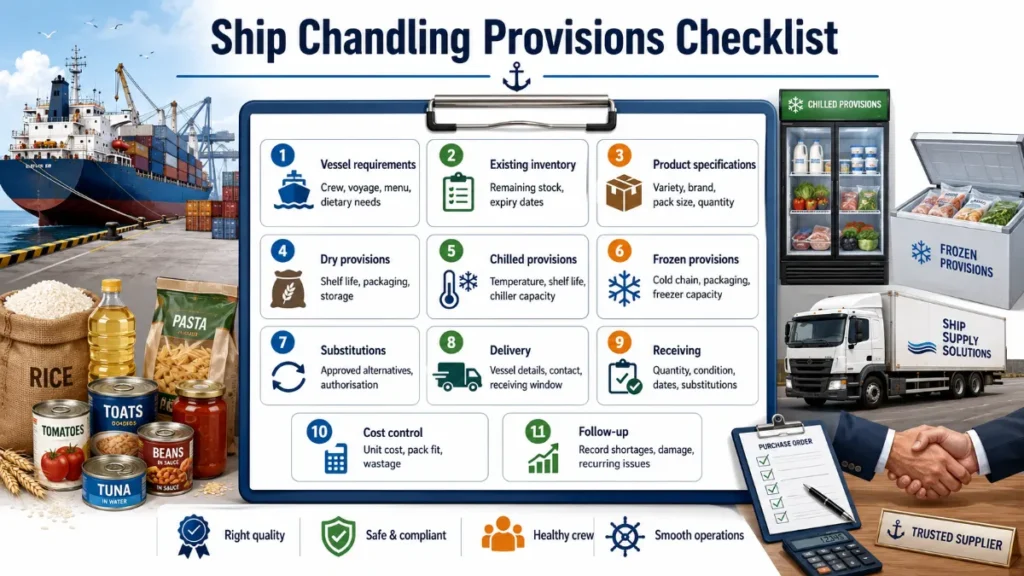
| Procurement area | What to confirm |
|---|---|
| Vessel requirements | Crew size, voyage duration, menu and dietary needs |
| Existing inventory | Quantities remaining and approaching expiry dates |
| Product specifications | Variety, brand, pack size and quantity |
| Dry provisions | Shelf life, packaging and storage suitability |
| Chilled provisions | Temperature control, shelf life and chiller capacity |
| Frozen provisions | Cold-chain handling, packaging and freezer capacity |
| Substitutions | Approved alternatives and authorisation process |
| Delivery | Vessel details, contact person and receiving window |
| Receiving | Quantity, condition, dates and substitutions |
| Cost control | Unit cost, pack suitability and likely wastage |
| Follow-up | Record shortages, damage and recurring issues |
Frequently Asked Questions
What are common ship chandling provisions?
Common provisions include rice, flour, lentils, beans, spices, cooking oils, canned foods, dairy products, frozen foods, condiments, snacks and beverages. The exact order depends on the crew, menu, voyage duration and onboard storage.
How early should provisions be ordered?
Orders should be submitted as early as operationally possible. Large orders, unusual products and mixed dry, chilled and frozen deliveries may require additional preparation time.
What information should be included in an order?
Include the product name, variety, brand preference, pack size, quantity, storage category and approved alternatives. Vessel details and the required delivery window should also be provided.
How should chilled and frozen products be checked?
Inspect the packaging, product condition, dates and temperature-sensitive state during receiving. Move the items promptly into suitable onboard cold storage.
How can buyers reduce food waste onboard?
Review existing inventory, use consumption records, order practical quantities, choose suitable pack sizes and rotate products according to expiry dates.
Should alternative products be accepted?
Alternatives can prevent shortages, but substitution rules should be agreed upon before delivery. Products connected to allergies, dietary restrictions or religious requirements should not be replaced without approval.
Conclusion
Effective procurement of ship chandling provisions in Singapore depends on seven core strategies:
- Define the vessel’s requirements
- Plan dry provisions carefully
- Protect the chilled and frozen cold chain
- Prepare precise specifications
- Coordinate and inspect every delivery
- Control costs and food waste
- Work with a dependable supplier
By applying these seven strategies, ship chandlers and maritime procurement teams can reduce ordering errors, improve storage planning and maintain a more dependable supply of food provisions for vessel crews.
















1 thought on “Ship Chandling Provisions in Singapore: 7 Proven Procurement Strategies”
Hi Dashmesh Team 👋🇮🇳🇸🇬
I’m Paras from Meghchandra EXIM, India.
I came across Dashmesh and noticed your Malika Jaggery range. We supply export-quality Indian jaggery in ball/round, block & powder formats, with retail and bulk packaging options.
We’d love to explore supplying Dashmesh as an additional Indian sourcing partner.
Could you please share the contact of your jaggery purchasing/import team?
Thank you! 🙏
Paras | Meghchandra EXIM