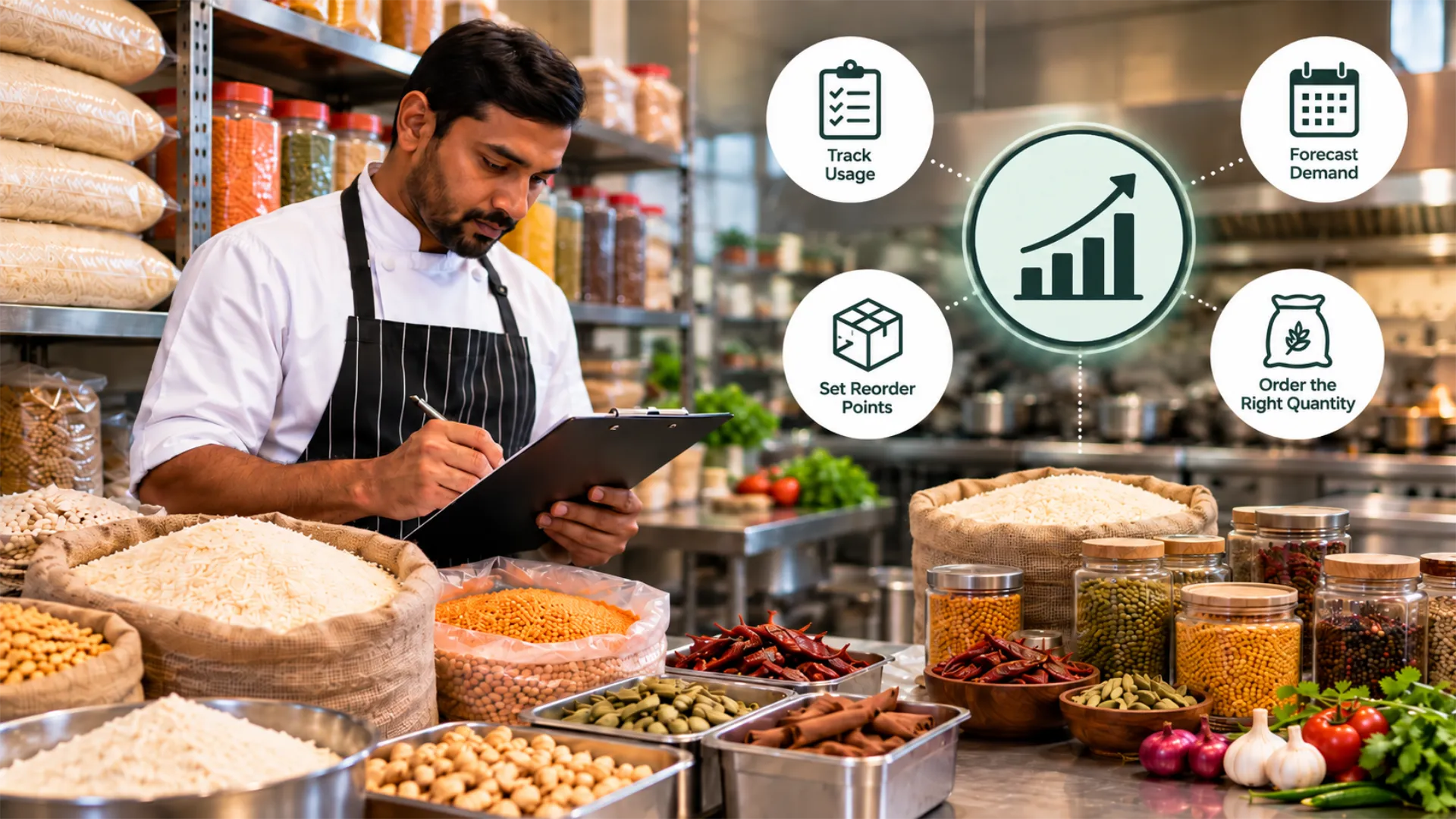

Why Restaurant Procurement Is Different From Regular Grocery Buying
A restaurant buys ingredients with a different purpose from a home cook. Every purchase must support service speed, food quality, portion control, kitchen workflow and profitability.
For Indian restaurants, procurement is especially important because many dishes depend on specific ingredients. A change in rice quality can affect biryani texture. A different dal may change cooking time. A weaker spice blend can affect flavour. Poor-quality paneer, yoghurt or dairy can affect both taste and food safety.
Restaurant procurement in Singapore usually involves:
- Larger order volumes
- Repeated weekly or monthly purchases
- Commercial pack sizes
- Delivery scheduling
- Bulk pricing
- Storage planning
- Product consistency
- Supplier credit or payment terms
- Urgent replenishment support
- Clear invoicing for cost tracking
This is why many restaurants prefer working with a supplier that can support several categories under one roof, instead of sourcing every ingredient from a different vendor. An Indian restaurant grocery supplier Singapore can simplify this process significantly.
A well-organised procurement process also supports food safety and operational discipline. The Singapore Food Agency highlights the importance of safe handling, proper storage, prevention of cross-contamination and storage at required temperatures for food establishments. For restaurants, this means supplier selection should not be based on price alone. Product handling, delivery reliability and storage suitability all matter.
What a One-Stop Indian Restaurant Grocery Supplier Should Provide
A one-stop supplier does not need to supply every single item used in the restaurant. However, it should cover enough of the core pantry to reduce procurement complexity.
For Indian restaurants, the most important categories usually include rice, lentils, flours, spices, oils, dairy, frozen products, snacks, pickles, pastes and dry pantry goods.
The goal is simple: reduce the number of suppliers while improving reliability.
When restaurants consolidate common grocery categories with one supplier, they can simplify ordering, reduce administrative work, improve delivery planning and negotiate more effectively based on regular purchase volume.
Dashmesh supports restaurants and other business customers through its restaurant and B2B supply focus, while its wider product range includes rice, pulses, spices, frozen and dairy products, snacks and other Indian and Pakistani food products.
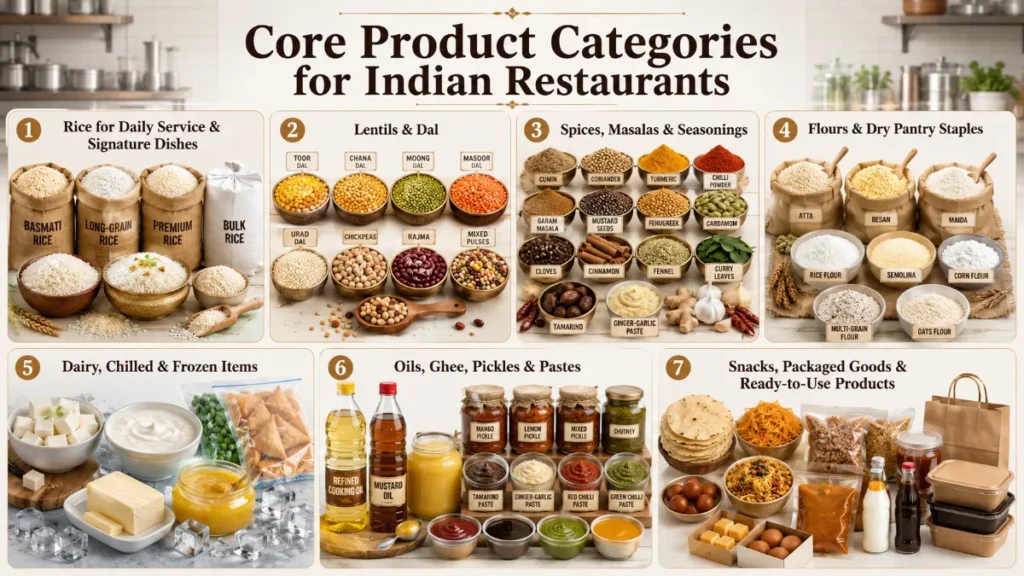
Core Product Categories for Indian Restaurants
1. Rice for Daily Service and Signature Dishes
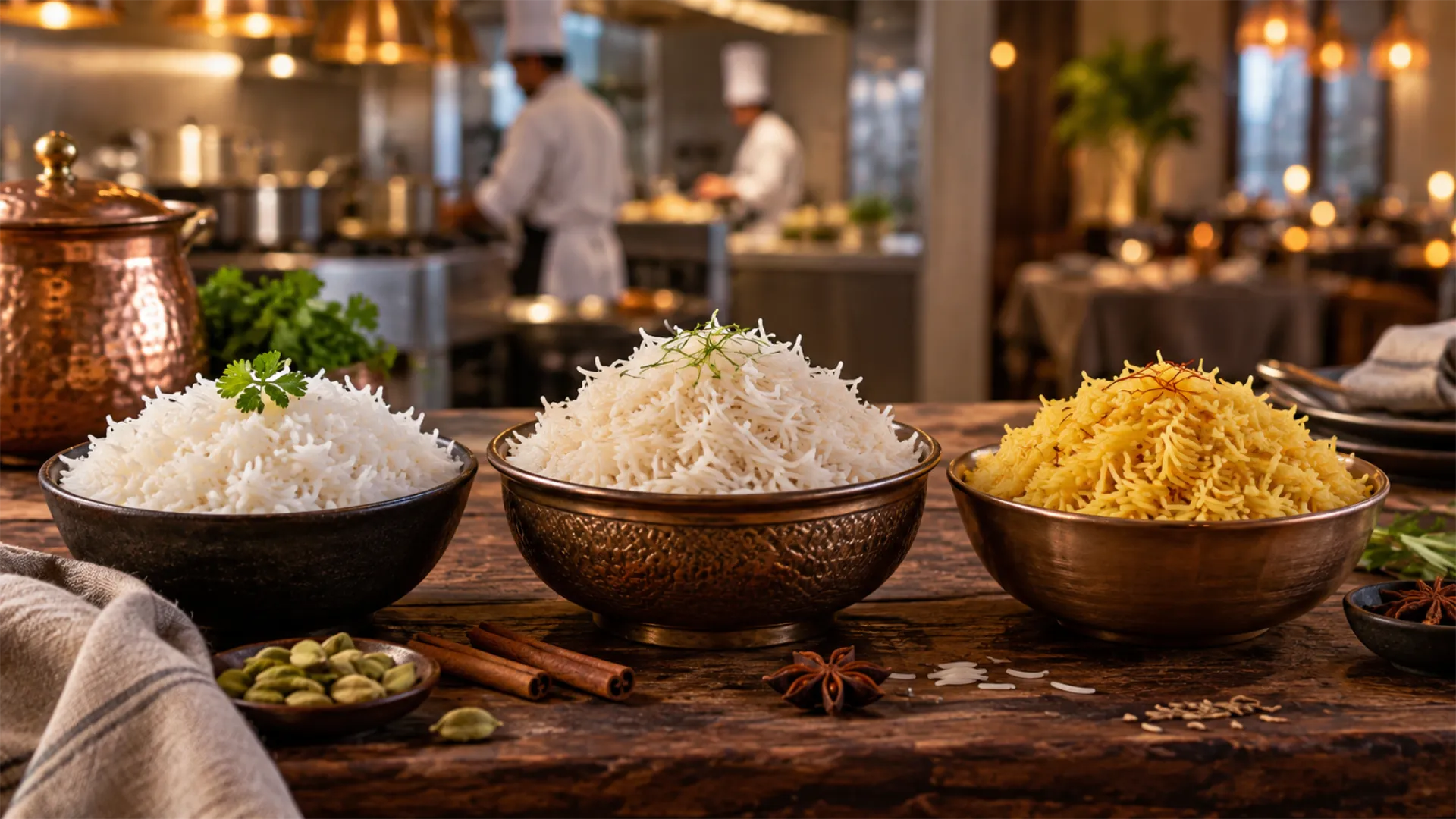
Rice is one of the most important ingredients in many Indian restaurants. Different dishes require different rice qualities, and the choice of rice can affect aroma, texture, grain separation and yield after cooking.
Choosing the right Indian restaurant grocery supplier Singapore can greatly enhance a restaurant’s operational efficiency.
Restaurants may need:
- Basmati rice for biryani and pulao
- Everyday rice for staff meals or set meals
- Long-grain rice for catering
- Premium rice for signature dishes
- Bulk rice packs for high-volume kitchens
For restaurants, rice selection is not only about price. Grain length, aroma, ageing, cooking yield and texture after service all matter. A reliable supplier should help restaurants maintain consistent rice quality across repeat orders.
For restaurants that serve biryani, pulao or premium rice-based dishes, the quality of basmati rice is especially important. Dashmesh carries a range of rice products and has also covered how restaurants should choose rice in its guide on basmati rice wholesale in Singapore.
2. Lentils and Dal for Menu Consistency
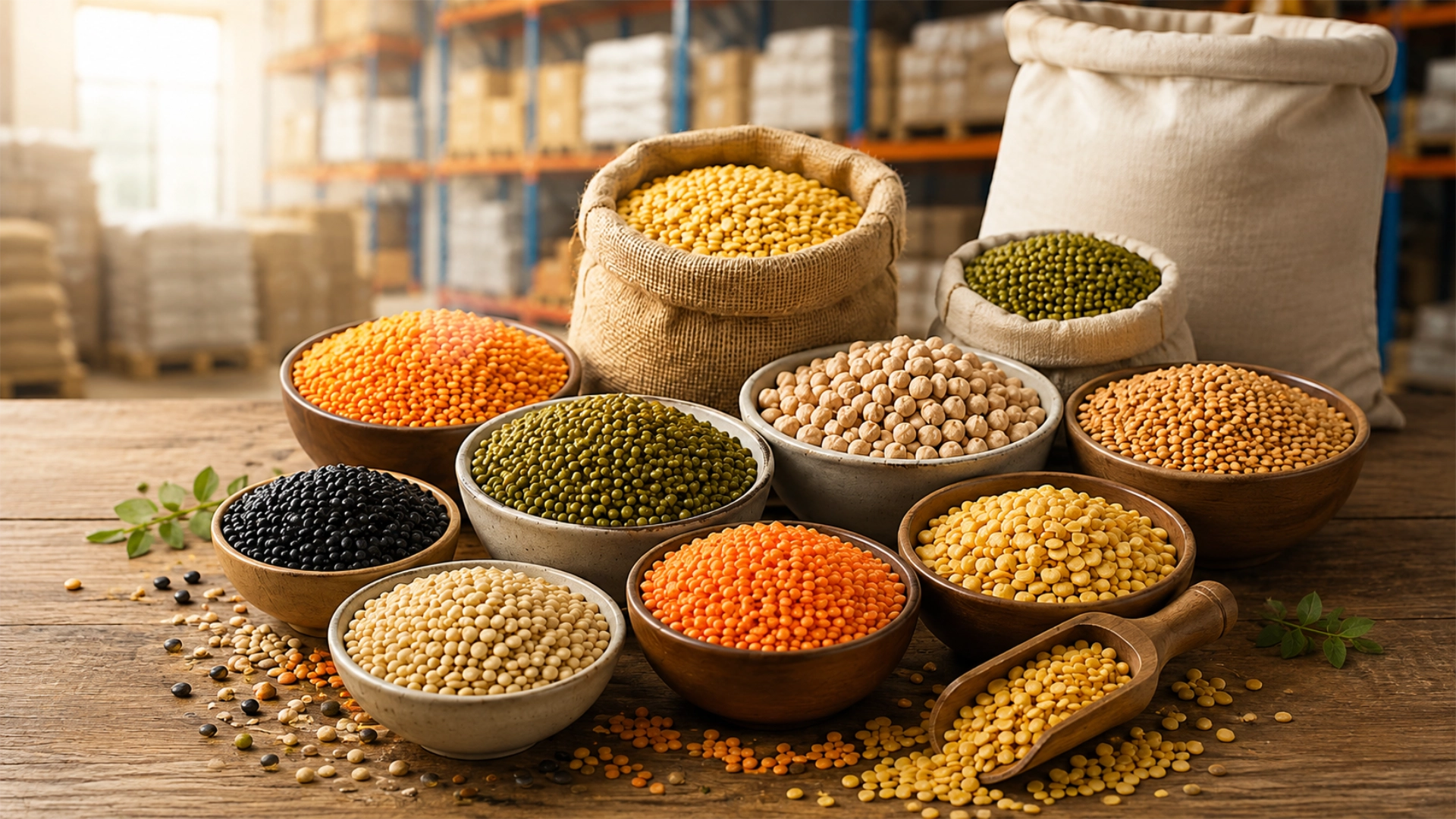
Dal is a staple across many Indian menus. Different lentils behave differently during cooking, especially in commercial batches. Cooking time, texture, water absorption and breakage can vary from one type of dal to another.
Common restaurant requirements include:
Choosing the right Indian restaurant grocery supplier Singapore can streamline your procurement process.
- Toor dal
- Chana dal
- Moong dal
- Masoor dal
- Urad dal
- Whole black lentils
- Chickpeas
- Rajma
- Mixed pulses
Restaurants should not evaluate dal only by purchase price. A cheaper dal that takes longer to cook, breaks unevenly or produces inconsistent texture may increase labour, energy use and wastage.
For restaurants that prepare dal makhani, chana masala, sambar, tadka dal, rajma, mixed lentil curries or vegetarian set meals, consistency in lentils is essential. A dependable supplier helps chefs maintain repeatable kitchen output across daily service, catering orders and buffet preparation.
Restaurants looking to understand lentils in more detail can also refer to Dashmesh’s Indian lentils guide.
3. Spices, Masalas and Seasoning Essentials
Indian cuisine depends heavily on spice quality. Restaurants often require both whole spices and ground spices, depending on the menu and kitchen process.
Typical items include:
- Cumin
- Coriander
- Turmeric
- Chilli powder
- Garam masala
- Mustard seeds
- Fenugreek
- Cardamom
- Cloves
- Cinnamon
- Fennel
- Curry leaves
- Tamarind
- Ginger-garlic paste
- Ready spice blends
For restaurants, spice consistency is critical. A change in colour, aroma or heat level can affect the taste of the final dish. A dependable Indian restaurant supplier should provide stable stock and help restaurants avoid last-minute substitutions that affect menu quality.
Whole spices may be preferred for tempering, biryani, marinades and slow-cooked dishes, while ground spices are useful for faster kitchen preparation. Restaurants that handle high-volume service often need both options.
Dashmesh offers a range of spices and has also published a guide on choosing an Indian spices supplier in Singapore.
4. Flours and Dry Pantry Staples
Indian restaurants may use different flours depending on their menu. These are not just basic pantry items. They affect dough texture, frying results, snack preparation and dessert consistency.
Common flour and dry pantry requirements include:
- Atta
- Besan
- Maida
- Rice flour
- Semolina
- Corn flour
- Specialty flours for snacks or sweets
Flours must be stored properly and supplied in suitable quantities. Restaurants should consider turnover rate, storage conditions and pack size when ordering.
For example, a restaurant that prepares chapati, naan, paratha, pakora, bhatura, dosa-style items or Indian sweets may require different flour types and grades. Ordering the wrong flour can affect preparation time, texture and final presentation.
Good dry pantry management also prevents unnecessary wastage. Restaurants should avoid over-ordering slow-moving flours, especially when storage space is limited.
5. Dairy, Chilled and Frozen Items
Many Indian dishes depend on dairy and chilled products. Paneer, yoghurt, cream, butter and ghee may be used across curries, breads, desserts, marinades and beverages.
Restaurants may also require frozen products such as:
- Frozen vegetables
- Frozen snacks
- Frozen breads
- Frozen sweets
- Ready-to-cook items
- Frozen paneer or dairy-based ingredients
For chilled and frozen products, handling matters. Restaurants should choose suppliers that understand temperature-sensitive delivery and can support predictable replenishment.
The Singapore Food Agency’s food safety guidance reinforces the importance of safe food handling and proper temperature control. For restaurants, this makes it important to work with suppliers that treat chilled and frozen items as operationally sensitive products, not just normal grocery goods.
This is especially important for restaurants that handle buffet service, catering, festive orders or large delivery volumes. A delayed or poorly handled chilled delivery can affect kitchen planning and food quality.
6. Oils, Ghee, Pickles and Pastes
Cooking oils, ghee, pickles and pastes may seem like supporting ingredients, but they affect flavour, preparation speed and cost.
Restaurants may require:
- Cooking oil
- Ghee
- Mustard oil
- Pickles
- Chutneys
- Tamarind paste
- Ginger-garlic paste
- Curry pastes
- Sauces
- Condiments
Reliable supply of these items helps kitchens prepare consistently without unnecessary delays.
For Indian restaurants, pastes and condiments can support faster preparation during busy service periods. However, restaurants should still monitor usage, quality and storage requirements carefully. A supplier that can provide these supporting items together with rice, lentils and spices can help simplify ordering.
7. Snacks, Packaged Goods and Ready-to-Use Products
Some restaurants also sell or serve packaged Indian snacks, papad, savoury items, sweets, beverages or retail add-ons.
This is especially relevant for restaurants that also handle:
- Catering orders
- Takeaway counters
- Event packs
- Buffet lines
- Corporate orders
- Festive sales
- Grocery-style retail sections
A supplier with a broader grocery range can help restaurants expand their offerings without creating a separate procurement process for every new category.
For example, a restaurant may add papad, chutneys, savoury snacks, sweets, drinks or ready-to-use items to support takeaway and catering packages. If these can be sourced through an existing grocery supplier, procurement remains easier to manage.
Why One-Stop Sourcing Helps Indian Restaurants
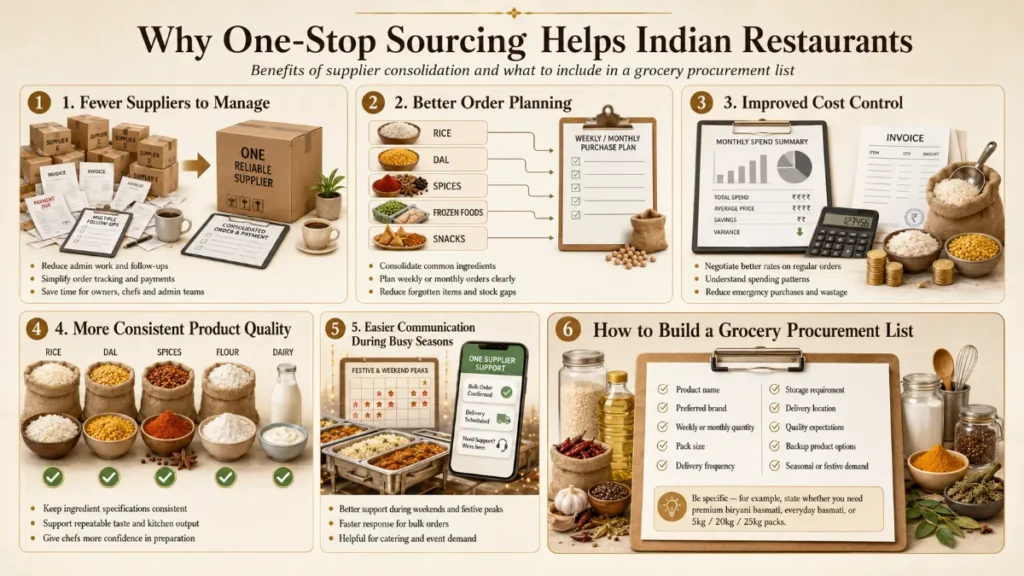
Fewer Suppliers to Manage
Every supplier relationship requires communication, order tracking, payment handling and problem resolution. When too many vendors are involved, procurement becomes messy.
A one-stop grocery supplier helps restaurants reduce the number of moving parts. This saves time for owners, chefs and admin teams.
Instead of contacting one vendor for rice, another for spices, another for lentils, another for frozen items and another for snacks, restaurants can consolidate common items into one structured order. This reduces back-and-forth communication and makes order management clearer.
Better Order Planning
When core ingredients come from one supplier, restaurants can plan orders more clearly. Instead of placing separate orders for rice, dal, spices, frozen foods and snacks, they can consolidate common items into a weekly or monthly procurement cycle.
This improves visibility over stock levels and reduces the chance of forgotten items.
For example, a restaurant may plan weekly orders for fast-moving items such as rice, dal, oil, dairy and frozen snacks, while ordering slower-moving spices or dry pantry goods less frequently. A good supplier can help restaurants understand which items should be ordered in bulk and which should be replenished more regularly.
Improved Cost Control
Food cost is one of the biggest concerns for restaurants. Consolidating regular purchases can help restaurants negotiate better rates, understand spending patterns and reduce emergency purchases.
Cost control is not only about cheaper pricing. It is also about reducing wastage, avoiding inconsistent quality and preventing stockouts that disrupt service.
Enterprise Singapore’s Food Services industry resources highlight the wider importance of streamlining operations and improving F&B productivity. Procurement is one of the practical areas where restaurants can become more organised, especially when ingredient ordering, stock tracking and supplier communication are handled systematically.
A supplier that provides clear invoices, consistent product specifications and reliable delivery can help restaurants understand their true ingredient costs more accurately.
More Consistent Product Quality
Consistency is essential for Indian restaurants. Customers expect the same taste when they return.
A reliable supplier helps restaurants maintain consistency across key ingredients such as rice, lentils, spices, flours and dairy. When the same product specifications are supplied regularly, chefs can prepare dishes with greater confidence.
This is especially important for signature items such as biryani, butter chicken, dal makhani, palak paneer, chana masala, samosas, thali sets, dosa accompaniments and Indian sweets. Even small variations in ingredients can affect cooking results.
Supplier consistency supports kitchen consistency.
Easier Communication During Busy Seasons
Restaurants often experience higher demand during festive periods, weddings, catering jobs, corporate events and weekends.
A supplier that already understands the restaurant’s regular order patterns can respond better when demand increases. This is especially useful for bulk rice, dal, spices, frozen snacks and catering-related pantry items.
For example, before Deepavali, Hari Raya, wedding seasons or corporate catering peaks, restaurants may need to increase stock levels for rice, oil, ghee, snacks, sweets, frozen foods and spices. A supplier familiar with the restaurant’s normal usage can better support advance planning.
How Restaurants Should Build a Grocery Procurement List
Before requesting a quotation, restaurants should prepare a clear procurement list. This helps the supplier understand the kitchen’s needs and recommend suitable product options.
A useful list should include:
- Product name
- Preferred brand, if any
- Monthly or weekly quantity
- Pack size
- Delivery frequency
- Storage requirement
- Required delivery location
- Special quality expectations
- Backup product options
- Seasonal or festive demand patterns
For example, instead of asking only for “basmati rice,” a restaurant should indicate whether it requires premium biryani rice, everyday basmati, 5kg packs, 20kg packs or 25kg sacks.
The more precise the request, the more accurate the quotation will be.
Example Procurement List for an Indian Restaurant
A restaurant preparing to request a quote may organise its grocery list like this:
| Product Category | Example Items | Procurement Notes |
|---|---|---|
| Rice | Basmati rice, long-grain rice, everyday rice | State preferred pack size, expected monthly usage and whether rice is for biryani, pulao, staff meals or catering |
| Lentils and Pulses | Toor dal, chana dal, moong dal, masoor dal, chickpeas, rajma | Include cooking requirements and expected batch volume |
| Spices | Cumin, coriander, turmeric, chilli powder, garam masala, cardamom, cloves | Indicate whole or ground spices and preferred pack size |
| Flours | Atta, besan, maida, rice flour, semolina | Match flour type to menu items such as breads, snacks or sweets |
| Dairy and Chilled | Paneer, yoghurt, butter, cream, ghee | Confirm storage and delivery needs |
| Frozen Items | Frozen vegetables, frozen snacks, frozen breads, frozen sweets | State delivery timing and freezer storage capacity |
| Oils and Pastes | Cooking oil, mustard oil, ginger-garlic paste, tamarind paste, curry pastes | Track usage carefully because these items affect food cost |
| Snacks and Packaged Goods | Papad, sweets, savoury snacks, drinks, ready-to-use products | Useful for takeaway, catering and retail add-ons |
This structure makes it easier for both the restaurant and supplier to discuss pricing, pack sizes, availability and delivery frequency.
Questions to Ask Before Choosing an Indian Restaurant Supplier
Product Range
Can the supplier provide rice, dal, spices, flours, oils, dairy, frozen products, snacks and pantry staples?
A supplier with broader category coverage is more useful for restaurants that want to consolidate ordering.
Dashmesh’s wider Indian grocery supplier coverage is relevant for restaurants that want access to multiple Indian and Pakistani grocery categories through one established supplier.
Stock Reliability
Are common items available consistently?
Restaurants should ask whether key products are regularly stocked and whether the supplier can support repeat orders without frequent substitutions. Stock reliability is especially important for core menu items.
If a restaurant’s biryani depends on a particular rice grade, or its dal depends on a specific lentil type, frequent substitutions can affect menu consistency.
Pack Sizes
Does the supplier offer commercial pack sizes?
Restaurants often require larger packs than retail customers. Suitable pack sizes help reduce cost and storage inefficiency.
For example, a household may buy 1kg or 5kg packs, while a restaurant may require 20kg or 25kg packs for high-volume items. However, larger pack sizes only make sense when the restaurant has proper storage space and sufficient turnover.
Delivery Support
Can the supplier deliver according to the restaurant’s operating schedule?
Delivery timing is important because restaurants may not have space or manpower to receive goods at any time of day. Morning deliveries, pre-service deliveries or planned weekly delivery windows can make operations smoother.
Restaurants should also clarify whether chilled and frozen products are handled separately from dry goods.
Food Safety and Handling
How are dry, chilled and frozen products stored and transported?
Restaurants should work with suppliers that understand food handling expectations, especially for temperature-sensitive products. SFA’s guidance on temperature control in cooked food is a useful reminder that temperature management is a serious part of food safety. While restaurants are responsible for their own kitchen handling, supplier delivery practices also matter.
Invoicing and Payment
Can invoices be clearly structured by product, quantity and price?
Clear invoices help restaurants track costs and manage procurement records. This is important when owners need to monitor food cost changes across rice, lentils, dairy, oil, frozen foods and spices.
A supplier that provides organised invoices can make monthly review easier.
Responsiveness
How quickly does the supplier respond when items are unavailable or urgent replenishment is needed?
Good communication is important when kitchens face last-minute changes. This is especially true during weekends, public holidays, festive periods and catering peaks.
Common Procurement Mistakes Restaurants Should Avoid
Choosing Only Based on Price
Low prices may seem attractive, but the cheapest supplier is not always the best choice. Poor product consistency, late delivery or missing items can cost the restaurant more in the long run.
Restaurants should compare price together with reliability, product range, service quality and order accuracy.
A cheaper rice that produces poor yield, a dal that takes longer to cook, or a spice that lacks aroma may reduce kitchen efficiency and affect customer experience.
Not Tracking Monthly Usage
Many restaurants reorder based on habit instead of actual usage. This can lead to overstocking, wastage or emergency purchases.
A basic monthly usage list helps restaurants identify which products should be ordered in bulk and which should be ordered more frequently in smaller quantities.
Restaurants should track at least the following:
- Rice usage
- Dal and lentil usage
- Oil and ghee usage
- Spice usage
- Frozen item usage
- Dairy usage
- Slow-moving pantry items
- Seasonal demand changes
This helps restaurants make better ordering decisions.
Ignoring Storage Limits
Bulk buying is useful only when the restaurant has proper storage space. Ordering too much rice, flour, dal or frozen food can create storage problems.
Restaurants should match order quantities to shelf life, turnover rate and available storage.
Dry goods should be stored in clean, dry and organised spaces. Chilled and frozen goods need suitable temperature control. Poor storage can create wastage even when the supplier provides good products.
Not Confirming Product Specifications
Different brands and grades can produce different results. Restaurants should confirm specifications for rice, dal, flour, spices and dairy before placing large orders.
This is especially important when switching suppliers.
Restaurants should sample or test critical ingredients before committing to larger orders. For example, chefs may want to test rice yield, dal cooking time, spice strength or paneer texture before changing supply.
Depending on Too Many Vendors
Using too many suppliers can make procurement harder to control. It increases admin work, communication gaps and delivery coordination issues.
A primary supplier for core Indian grocery categories can simplify operations. Restaurants may still keep backup suppliers for specialised or urgent items, but the regular procurement process should be as organised as possible.
When Should a Restaurant Review Its Supplier?
Restaurants should review their supplier relationship regularly. This does not mean changing suppliers often. It means checking whether the current supplier still supports the restaurant’s needs.
A review is useful when:
- Menu items change
- Sales volume increases
- Delivery issues become frequent
- Product quality becomes inconsistent
- Food costs rise sharply
- Storage needs change
- The restaurant expands to a new outlet
- Catering or event orders increase
- Festive demand becomes harder to manage
A good supplier should be able to grow with the restaurant and support changing requirements.
For restaurants looking to improve wider operational efficiency, Enterprise Singapore’s F&B Process Optimisation Programme also reflects the importance of reviewing and improving outlet processes. Procurement is one of the practical areas where better systems can reduce cost pressure and improve consistency.
Dashmesh as a Restaurant Grocery Supply Partner in Singapore
Dashmesh has served Singapore’s Indian and Pakistani food market since 1985, supplying a wide range of food products to restaurants, retailers, wholesalers, supermarkets, community organisations and other business customers.
For restaurants, Dashmesh’s strength lies in its broad product coverage and understanding of Indian foodservice needs. Its product categories include rice, pulses, nuts, spices, frozen and dairy products, snacks and specialties. This makes it easier for restaurants to source many core ingredients through one supplier instead of managing several separate vendors.
Dashmesh also works with restaurants and foodservice businesses across Singapore, supporting commercial kitchens that require consistent quality, reliable delivery and suitable product variety.
For Indian restaurants looking to simplify procurement, Dashmesh offers a practical route to consolidate essential grocery items such as rice, dal, flours, spices, oils, frozen goods, dairy items, snacks and dry pantry products.
Restaurants can explore Dashmesh’s business supply segments, browse its wider product categories, or review related guides such as Food Supplier Checklist Singapore, Basmati Rice Wholesale Singapore and Indian Spices Supplier in Singapore.
One-Stop Sourcing Checklist for Indian Restaurants
Before requesting a quote from an Indian restaurant grocery supplier in Singapore, prepare the following:
- List of core ingredients
- Estimated weekly or monthly usage
- Preferred pack sizes
- Current brands used
- Delivery address
- Delivery timing preference
- Dry, chilled and frozen requirements
- Expected festive or catering demand
- Payment or invoicing requirements
- Key items that must not run out
This helps the supplier provide a more useful quotation and recommend suitable product options.
Frequently Asked Questions
1. What does an Indian restaurant grocery supplier in Singapore provide?
An Indian restaurant grocery supplier in Singapore provides bulk food products used by commercial kitchens, including rice, lentils, flours, spices, oils, dairy products, frozen foods, snacks, pickles, pastes and pantry staples. The focus is on commercial quantities, reliable supply and repeat ordering.
2. How is restaurant grocery procurement different from retail grocery buying?
Restaurant procurement involves larger quantities, scheduled delivery, commercial pack sizes, invoice tracking, food cost control and consistent quality. Retail grocery buying is usually designed for household needs, not repeated commercial kitchen operations.
3. Why should Indian restaurants consider one-stop sourcing?
One-stop sourcing helps restaurants reduce the number of suppliers they manage. This simplifies ordering, delivery coordination, invoicing and stock planning. It can also improve cost control when regular purchases are consolidated.
4. What are the most important grocery categories for Indian restaurants?
The most important categories usually include basmati rice, everyday rice, dal, lentils, flours, whole spices, ground spices, masalas, oils, ghee, dairy products, frozen foods, snacks, pickles, pastes and dry pantry goods.
5. How can restaurants control food costs through better procurement?
Restaurants can control food costs by tracking monthly usage, buying suitable pack sizes, consolidating regular purchases, reducing wastage, avoiding emergency buying and working with suppliers that provide consistent product quality.
6. What should restaurants prepare before requesting a supplier quote?
Restaurants should prepare a list of required products, estimated order quantities, pack size preferences, delivery location, delivery frequency, preferred brands and any special storage or handling requirements.
7. Is it better to use one supplier or multiple suppliers?
Many restaurants use one primary supplier for core grocery categories and keep backup options for specialised or urgent items. A strong primary supplier helps simplify procurement, while backup suppliers can reduce risk for critical products.
8. Why is supplier reliability important for Indian restaurants?
Supplier reliability affects daily kitchen operations. Late deliveries, missing items or inconsistent product quality can disrupt food preparation, affect menu availability and reduce customer satisfaction.
9. Can Dashmesh supply restaurants in Singapore?
Yes. Dashmesh supplies foodservice establishments and offers a wide range of Indian and Pakistani food products suitable for restaurants, including rice, pulses, spices, frozen and dairy products, snacks and pantry staples.
10. How often should restaurants review their grocery supplier?
Restaurants should review their grocery supplier at least once a year or whenever there are major changes in menu, outlet size, customer volume, delivery needs, product quality or food costs.
Conclusion
Choosing the right Indian restaurant grocery supplier Singapore businesses can rely on is not just a purchasing decision. It is part of building a stable and efficient restaurant operation.
For Indian restaurants, ingredient consistency directly affects flavour, preparation time, portion control and customer experience. A dependable supplier helps restaurants manage core categories such as rice, dal, spices, flours, dairy, frozen foods, snacks and pantry staples with greater confidence.
One-stop sourcing can reduce administrative work, improve delivery planning, support food cost control and make procurement more predictable. Instead of reacting to shortages or managing too many vendors, restaurants can build a structured supply process around regular usage, suitable pack sizes and reliable replenishment.
For restaurants in Singapore looking to simplify procurement, Dashmesh offers a practical supply partner with broad product coverage, long-standing market experience and a strong understanding of Indian foodservice needs.
Request a Restaurant Supply Quote
Dashmesh supports restaurants, caterers and foodservice businesses with a wide range of Indian and Pakistani grocery products, including rice, dal, spices, flours, dairy, frozen foods, snacks and pantry staples.
If you are reviewing your restaurant procurement or looking to consolidate suppliers, contact Dashmesh to discuss your product list, order volume and delivery needs.