
Introduction
The restaurant industry is notoriously competitive, and one of the most significant factors separating thriving establishments from those struggling is effective restaurant food costs management. Food costs often represent the largest variable expense for a restaurant, and even a small percentage point improvement can translate into substantial savings and increased profitability. In fact, food costs can range from 25% to 40% of a restaurant’s total revenue [Source: National Restaurant Association]. This means that for every dollar in sales, a significant portion goes towards purchasing ingredients. Understanding how to control and reduce these costs is not just good business practice; it’s essential for long-term survival and success.
Understanding restaurant food costs is crucial for any successful dining establishment. Effective management of restaurant food costs can lead to improved profitability and sustainability. To thrive in the restaurant industry, it’s imperative to keep a close eye on restaurant food costs, as they significantly impact overall financial health.
This comprehensive guide will delve into actionable strategies that restaurants can implement to reduce food costs without compromising on quality or guest satisfaction. From smart purchasing and inventory control to menu engineering and waste reduction, we will explore a multi-faceted approach to mastering your food costs and boosting your bottom line.
Effective management of restaurant food costs can create a significant competitive advantage for establishments. To effectively manage restaurant food costs, establish clear guidelines and practices that minimize waste and optimize purchasing.
The Foundation: Smart Purchasing and Vendor Relationships
Effective negotiation with suppliers can lead to lower restaurant food costs and improved ingredient quality.
Managing restaurant food costs in Singapore is one of the most important responsibilities for any restaurant owner. With rising ingredient prices, high rental costs, and intense competition, even small inefficiencies can quickly reduce profitability. Many restaurants struggle not because they lack customers, but because they fail to control what happens behind the scenes.
Restaurant food costs refer to the percentage of revenue spent on ingredients. While this concept sounds simple, it is influenced by many factors such as supplier pricing, kitchen practices, menu design, and staff discipline. When these elements are not managed properly, costs increase without warning.
The key is not just to reduce spending but to create systems that make your kitchen more efficient. When done correctly, cost control improves both profitability and consistency, which are essential for long-term success. The journey to reducing food costs begins long before ingredients reach your kitchen. It starts with strategic purchasing and cultivating strong relationships with your suppliers.
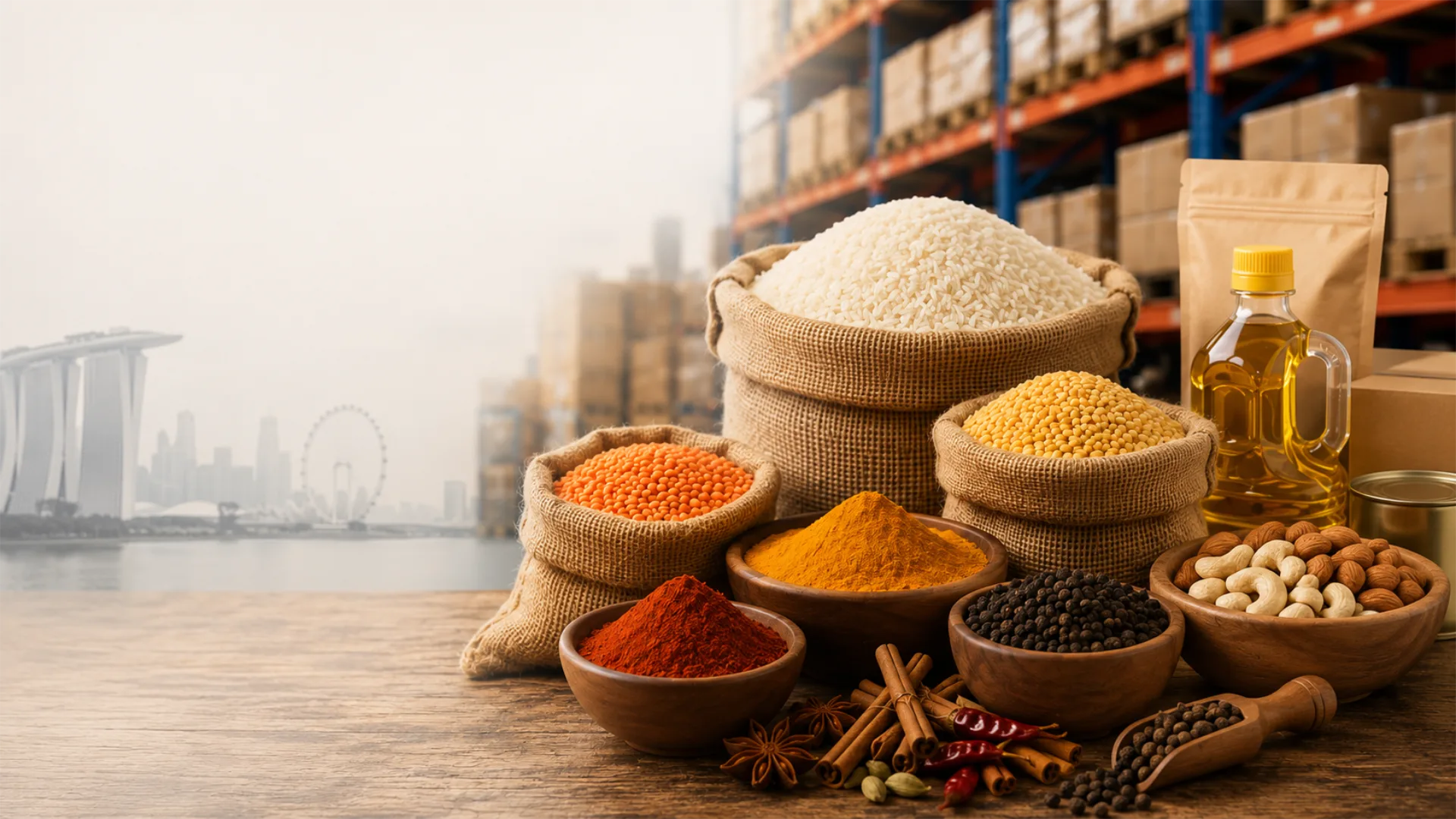
Singapore presents a unique operating environment for restaurants. Unlike countries with strong local agriculture, Singapore imports most of its food. This means prices are affected by global supply chains, currency fluctuations, and logistics costs.
As a result, restaurants often experience sudden increases in ingredient costs. Without proper systems in place, these changes can significantly affect margins. This is why many operators rely on consistent suppliers such as Dashmesh Singapore wholesale food supplier to ensure stable pricing and dependable quality.
Consistency in sourcing reduces uncertainty. When your ingredients are reliable, it becomes much easier to control waste, portioning, and overall food cost.
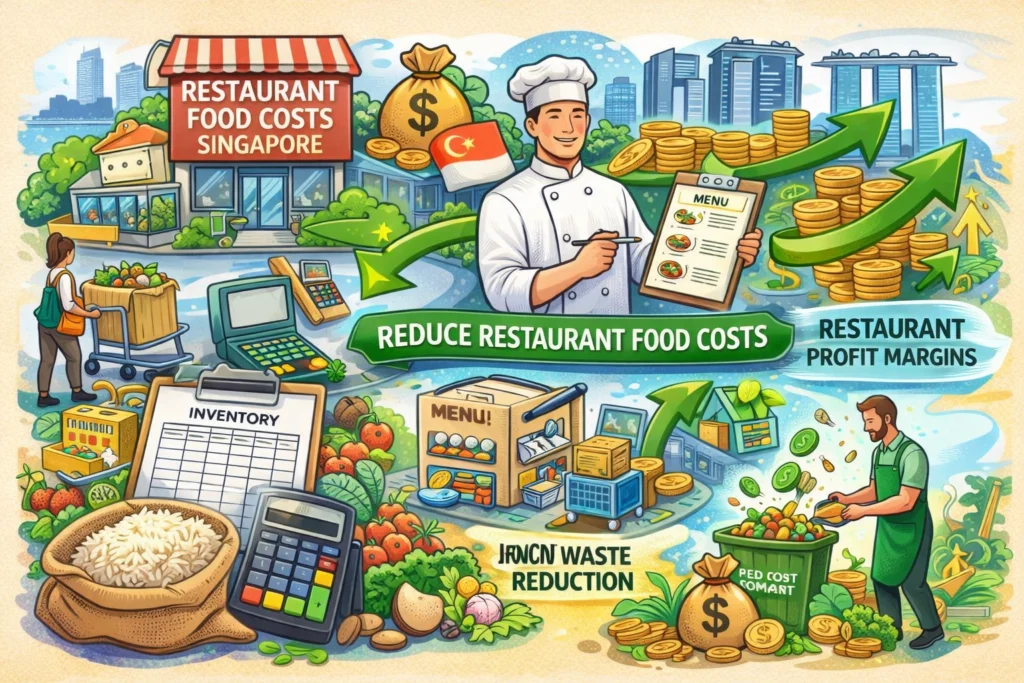
Negotiating with Suppliers: Reduce Restaurant Food Costs
Understanding restaurant food costs is essential for creating effective pricing strategies that resonate with customers. Regular audits of restaurant food costs can reveal areas for improvement and help maintain a competitive edge.
- Leverage Your Buying Power: The more you buy from a single supplier, the more leverage you have to negotiate better prices. Consider consolidating your orders for staples like produce, meat, and dairy with fewer, more reliable vendors.
- Regularly Review Prices: Don’t assume your current prices are the best. Regularly compare quotes from multiple suppliers for the same items. Even a small difference per unit can add up significantly over time.
- Understand Market Fluctuations: Prices for certain ingredients, especially fresh produce and proteins, can fluctuate based on seasonality, weather, and global demand. Stay informed about these trends to time your purchases strategically. For example, buying certain fruits and vegetables when they are in season locally can often lead to lower prices and better quality.
- Look for Bulk Discounts: While it might seem counterintuitive, buying in larger quantities can sometimes lead to lower per-unit costs. However, this must be balanced against your actual usage and storage capacity to avoid spoilage.
- Explore Alternative Suppliers: Don’t be afraid to explore smaller, local suppliers or specialty providers. They may offer competitive pricing or unique products that can differentiate your menu.
- Build Relationships: A strong, long-term relationship with your suppliers can be invaluable. They might be more willing to offer you better deals, inform you of upcoming price changes, or accommodate special requests.
Understanding Restaurant Food Costs Percentage
To manage restaurant food costs effectively, you must first understand how they are calculated. Food cost percentage is the ratio between the cost of ingredients and total food sales. Most restaurants in Singapore aim to keep this between 25 percent and 35 percent, depending on their concept.
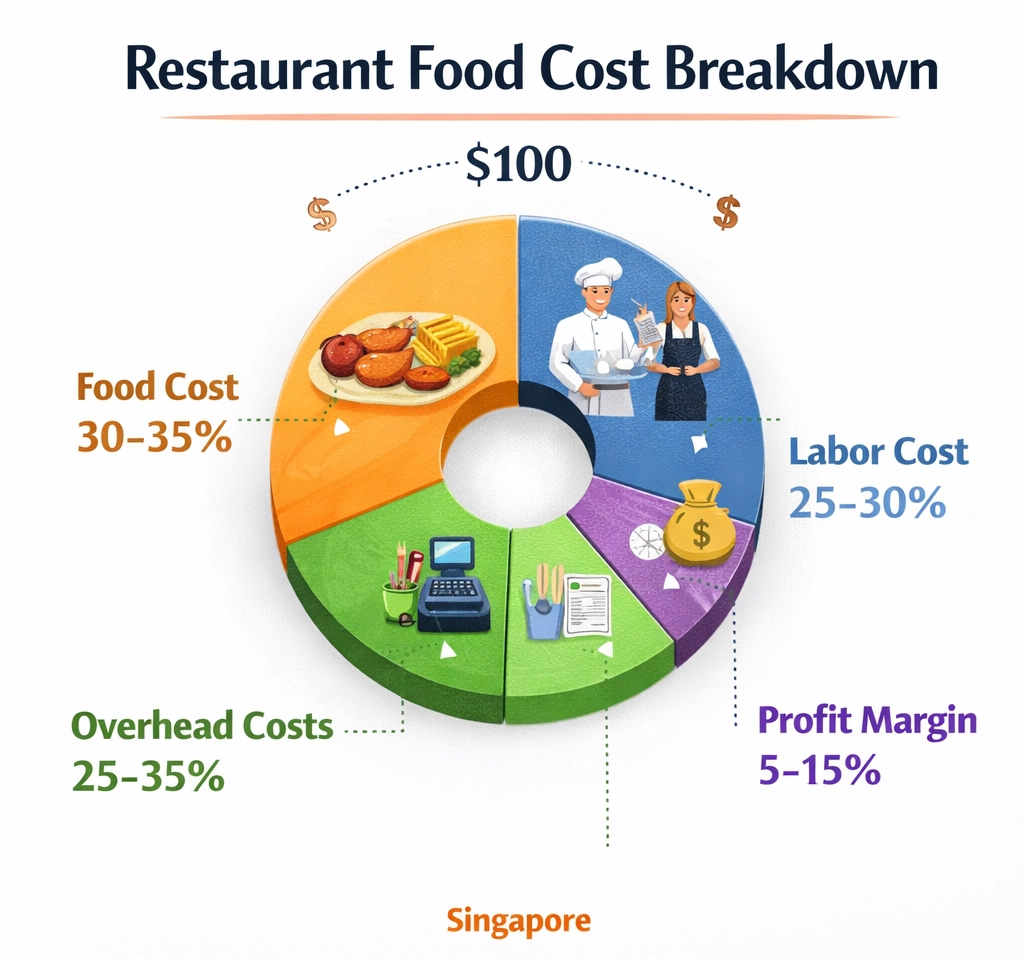
However, this number alone does not tell the full story. It is important to distinguish between ideal cost and actual cost. Ideal cost assumes perfect conditions, where there is no waste, no over-portioning, and no loss. Actual cost reflects what truly happens in the kitchen.
The difference between these two figures highlights inefficiencies. For example, if your actual cost is consistently higher, it may indicate poor inventory control, inconsistent portion sizes, or excessive waste. Understanding this gap allows you to take targeted action rather than guessing.
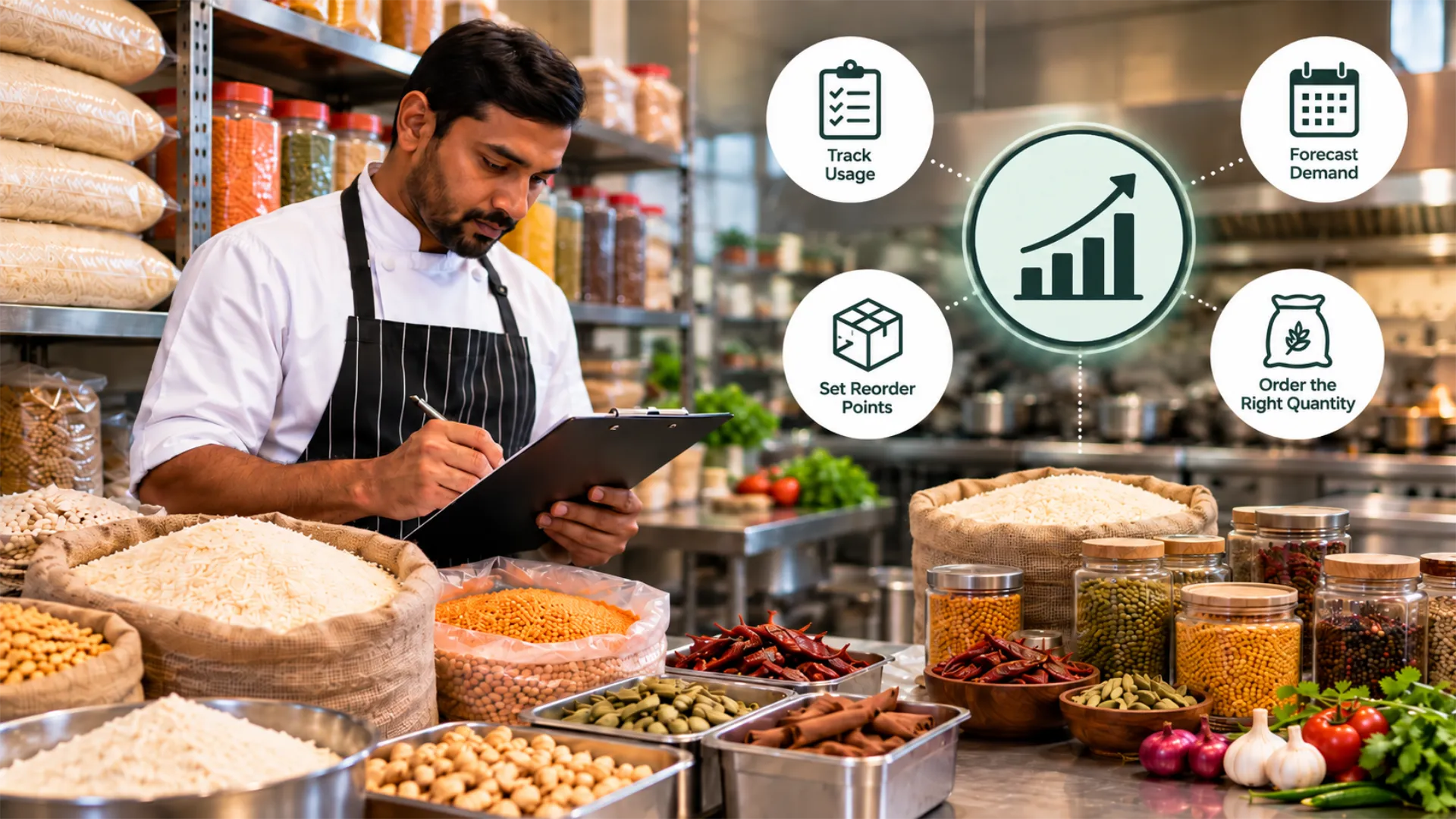
Efficient inventory management is key to understanding and controlling restaurant food costs effectively. Building an effective inventory management system can help you track restaurant food costs and reduce waste.
Establishing Clear Receiving Procedures
- Verify Deliveries: Every delivery must be meticulously checked against the invoice. Ensure the quantity, quality, and price of each item match what was ordered. Never sign for a delivery without a thorough inspection.
- Inspect for Quality: Beyond just counting, assess the quality of the received goods. Are the vegetables fresh? Is the meat properly stored? Reject any items that don’t meet your standards. Poor quality ingredients can lead to waste and dissatisfied customers.
- Temperature Checks: For perishable items like dairy, meat, and seafood, temperature checks are crucial. Ensure they are delivered at the correct temperature to prevent spoilage and ensure food safety. The U.S. Food and Drug Administration (FDA) provides guidelines on safe food temperatures [Source: FDA Food Code].
- FIFO (First-In, First-Out): Implement a strict FIFO system for all inventory. This means older stock is used before newer stock, minimizing the risk of spoilage and ensuring ingredients are always fresh.
Regular training on cost awareness can empower staff to reduce restaurant food costs while maintaining quality.
Restaurant Inventory Management: The Backbone of Cost Control
Inventory tracking provides visibility into how ingredients are used. Without it, restaurants often rely on guesswork, which leads to over-ordering or shortages.
A simple Excel sheet can be enough to start. By recording purchase quantities, usage, and remaining stock, you can identify patterns and detect problems early. More advanced operations may use POS or inventory software, but the principle remains the same.
The goal is to create a clear picture of what is coming in and what is going out. This allows you to make informed decisions and avoid unnecessary spending.
Conducting Regular Inventory Counts
- Frequency is Key: Conduct physical inventory counts regularly – daily for high-value or perishable items, weekly for most others, and monthly for dry goods. The frequency will depend on your restaurant’s size and volume.
- Accurate Record-Keeping: Use inventory sheets or specialized software to record counts accurately. This data is essential for calculating your actual food costs and identifying discrepancies.
- Assign Responsibility: Designate specific individuals responsible for inventory counts to ensure consistency and accountability.
Restaurant Inventory Management
- Streamline the Process: Modern inventory management software can significantly simplify the process of tracking stock levels, calculating costs, and generating reports.
- Real-Time Data: Some systems can integrate with your point-of-sale (POS) system to provide real-time data on ingredient usage, helping you forecast needs more accurately.
- Identify Trends: Software can help you identify slow-moving items, potential overstocking, and areas where waste might be occurring.
Stock Rotation and Storage
- Proper Storage Techniques: Ensure all ingredients are stored correctly – refrigerated items at the right temperature, dry goods in cool, dark, and dry places, and frozen items at appropriate temperatures. Proper storage extends shelf life and prevents spoilage.
- Labeling: Clearly label all stored items with the date they were received and the expiration date. This is vital for the FIFO system and for identifying items that need to be used quickly.
- Organized Storage Areas: Keep your storage areas (walk-in refrigerators, freezers, dry storage shelves) clean and well-organized. This makes it easier to conduct inventory counts and locate items, reducing the time staff spend searching.
Menu Engineering: Designing for Profitability
Menu engineering is one of the most effective ways to improve profitability without increasing prices across the board. Instead of treating all dishes equally, you evaluate each item based on both its popularity and its contribution margin.
In practice, this means identifying which dishes generate the most profit and which ones drain resources. A popular dish that uses expensive ingredients may look successful but could actually reduce your margins. On the other hand, a less popular dish with a high margin may deserve more promotion.
By analysing your menu in this way, you can gradually shift customer demand toward more profitable items. This reduces overall restaurant food costs while increasing revenue at the same time. In Singapore, where ingredient prices fluctuate frequently, this approach provides a significant advantage.
Analyzing Menu Item Profitability and Popularity
- The Four Categories: Menu engineering categorizes items into four groups:
- Stars: High popularity, high profitability. These are your best sellers and should be promoted.
- Plowhorses: High popularity, low profitability. These are popular but don’t make much profit. Consider slightly increasing their price or finding ways to reduce their ingredient cost.
- Puzzles: Low popularity, high profitability. These have potential. Try featuring them more prominently, offering specials, or training staff to recommend them.
- Dogs: Low popularity, low profitability. Consider removing these from the menu unless they serve a specific niche purpose.
- Track Sales Data: Regularly analyze your POS data to understand which menu items are selling well and which are not.
- Calculate Food Cost Per Dish: For each menu item, accurately calculate its food cost. This involves summing the cost of all ingredients used in that dish.
Strategic Pricing
- Factor in All Costs: Pricing should not just cover food costs. It needs to account for labor, overhead, and desired profit margin.
- Perceived Value: While you need to ensure profitability, consider the perceived value by your customers. Overpricing can deter customers, while underpricing can lead to lost revenue.
- Psychological Pricing: Techniques like ending prices in .99 can influence customer perception.
Menu Design and Layout
- Highlight Profitable Items: Use design elements like boxes, bold text, or special icons to draw attention to your “star” dishes.
- Limit Choices: While variety is good, an overly extensive menu can overwhelm customers and increase inventory complexity. Focus on a well-curated menu that features your most profitable and popular items.
- Descriptive Language: Use appealing language to describe your dishes, emphasizing fresh ingredients and unique preparations. This can justify pricing and increase perceived value.
Implement Portion Control Systems to reduce Restaurant Food costs
Portion control is one of the most overlooked factors in cost management. Without clear standards, different staff members may serve different portion sizes, leading to inconsistency and higher costs.
To address this, restaurants must treat portion control as a system rather than a guideline. Recipes should be standardised, and staff should be trained to follow them precisely. Tools such as digital scales and portioning equipment can help ensure accuracy.
Even small differences in portion size can have a large impact over time. For example, serving just a little extra protein in each dish may seem harmless, but across hundreds of orders, it can significantly increase your food costs. Consistency is what protects your margins.
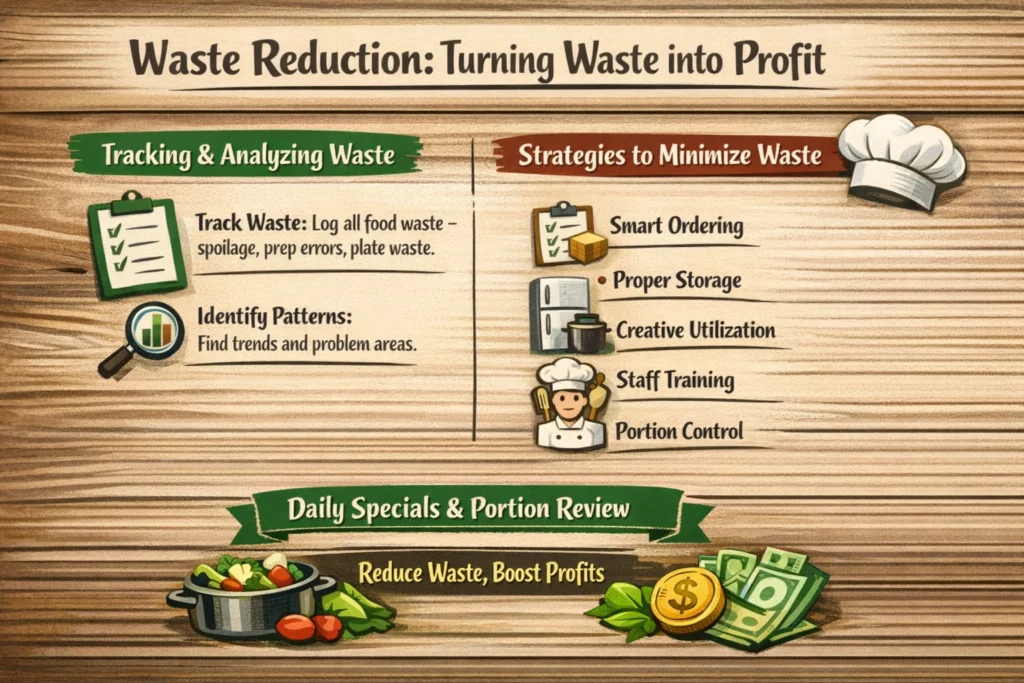
Waste Reduction: Turning Waste into Profit
Food waste is a direct drain on your profits. Implementing strategies to minimize waste is crucial.
Tracking and Analyzing Waste
- Waste Logs: Implement a system for tracking all food waste. This includes spoilage, preparation errors, over-portioning, and customer plate waste.
- Identify Patterns: Analyze waste logs to identify patterns. Are you consistently throwing away a particular ingredient? Is a specific dish frequently returned uneaten? This information can pinpoint areas for improvement.
Strategies for Minimizing Waste
- Smart Ordering: Order only what you need based on sales forecasts and current inventory. Avoid over-ordering, especially for perishable items.
- Proper Storage: As mentioned earlier, correct storage is key to preventing spoilage.
- Creative Utilization: Find ways to use ingredients creatively. For example, vegetable scraps can be used for stocks, and stale bread can be turned into croutons or breadcrumbs.
- Staff Training: Train your kitchen staff on proper preparation techniques to minimize waste and on the importance of portion control.
- Daily Specials: Use daily specials to move excess or soon-to-expire ingredients. This can be a great way to introduce new dishes and reduce spoilage.
- Portion Size Review: If you notice significant plate waste, it might indicate that your portion sizes are too large. Consider adjusting them.
Kitchen Efficiency and Staff Training
A well-trained and efficient kitchen team is vital for controlling food costs.
Standardized Recipes and Procedures
- Consistency is Key: Ensure all recipes are documented, precise, and followed consistently. This reduces errors, controls ingredient usage, and ensures consistent product quality.
- Training: Invest time in training new and existing staff on these standardized recipes and procedures.
Cross-Utilization of Ingredients
- Menu Planning: When planning your menu, look for opportunities to use ingredients across multiple dishes. This reduces the variety of ingredients you need to stock, minimizing spoilage and simplifying inventory. For example, if you use a specific type of herb or vegetable in several appetizers and entrees, it’s more cost-effective.
Staff Training on Cost Awareness
- Educate Your Team: Make your staff aware of the importance of food cost management. Explain how their actions – from proper portioning to minimizing waste – directly impact the restaurant’s profitability.
- Incentives: Consider implementing incentive programs for staff who demonstrate exceptional cost-saving efforts.
Leveraging Technology
Technology can be a powerful ally in your quest to reduce food costs.
Point-of-Sale (POS) Systems
- Sales Tracking: Modern POS systems track every sale, providing valuable data on item popularity and revenue.
- Inventory Integration: Many POS systems can integrate with inventory management software, automating tracking and providing real-time insights.
Inventory Management Software
- Detailed Tracking: As discussed, specialized software can automate inventory counts, track usage, calculate costs, and generate reports. This level of detail is often impossible to achieve manually. Websites like Toast offer integrated solutions.
Recipe Costing Software
- Accurate Calculations: Software can help you accurately calculate the food cost for each menu item, factoring in ingredient prices and portion sizes. This is crucial for effective menu engineering and pricing.
Beyond the Kitchen: Other Cost-Saving Avenues
While the focus is on food costs, other operational efficiencies can indirectly impact your bottom line and allow for more flexibility in ingredient sourcing.
Energy Efficiency
- Reduce Utility Bills: Implementing energy-saving practices, such as using energy-efficient appliances and turning off equipment when not in use, can lower overhead costs. This frees up budget that can be allocated elsewhere.
Labor Optimization
- Efficient Scheduling: Optimizing staff schedules to match peak and off-peak hours can reduce labor costs without sacrificing service quality.
The Importance of Quality
It’s crucial to reiterate that reducing food costs should never come at the expense of quality. Customers dine out for the experience, and that includes the taste and quality of the food. Sacrificing ingredient quality can lead to negative reviews, loss of repeat business, and ultimately, a decline in revenue, which negates any cost savings achieved. The goal is to be smarter about how you source, manage, and utilize your ingredients.
Conclusion
Reducing food costs for restaurants is an ongoing process that requires diligence, strategic planning, and a commitment from every member of the team. By implementing smart purchasing strategies, mastering inventory management, engineering your menu for profitability, minimizing waste, and leveraging technology, you can significantly improve your restaurant’s financial health. Remember, the ultimate goal is to achieve optimal profitability without compromising the quality and experience your customers expect. A well-managed food cost is a cornerstone of a successful and sustainable restaurant business. For more insights into optimizing restaurant operations, consider exploring resources from organizations like the National Restaurant Association.
Quality is paramount; however, managing restaurant food costs effectively is equally important for sustainability. In conclusion, understanding and managing restaurant food costs is a critical component of operating a successful restaurant. Conducting regular inventory counts is crucial for keeping restaurant food costs under control and preventing discrepancies.
Frequently Asked Questions (FAQs)
How often should I conduct a full inventory count?
A full physical inventory count is typically recommended at least once a month for all items. However, for high-volume or high-cost items (like prime meats or fresh seafood), daily or weekly counts are often necessary to maintain tight control and prevent discrepancies.
What is the difference between food cost and food cost percentage?
Food cost is the actual dollar amount spent on ingredients to produce menu items. Food cost percentage is that dollar amount divided by total food sales, expressed as a percentage (e.g., $10,000 in food cost / $40,000 in sales = 25% food cost percentage). This percentage is the key metric used to track profitability.
Can I reduce food costs by buying cheaper ingredients?
While using cheaper ingredients might seem like a quick fix, it can backfire. Lower quality ingredients can lead to poorer taste, increased spoilage, and customer dissatisfaction, ultimately harming your reputation and sales. The focus should be on sourcing the *best value* ingredients and managing them efficiently, rather than simply the cheapest.
Encouraging staff to be mindful of restaurant food costs can lead to innovative ideas for minimizing waste.
How does menu engineering help reduce food costs?
Menu engineering analyzes the popularity and profitability of each menu item. By identifying “dogs” (unpopular, unprofitable items) and “puzzles” (profitable but unpopular items), you can make informed decisions about menu adjustments, promotions, and pricing. This strategic approach ensures your menu is designed to maximize profit and minimize the cost associated with slow-moving or unprofitable dishes. You can find more on menu engineering principles on [Wikipedia](https://en.wikipedia.org/wiki/Menu_engineering).
What is the most common cause of high food costs in restaurants?
The most common causes of high food costs are poor inventory management, leading to spoilage and theft, and lack of standardized recipes and portion control, resulting in inconsistent ingredient usage and over-portioning. Uncontrolled waste is also a major contributor.
How can staff training impact food costs?
Staff training is critical. Properly trained staff understand the importance of portion control, accurate receiving, proper storage, and waste reduction techniques. Educating your team on cost-awareness and empowering them to identify and implement cost-saving measures can have a significant positive impact on your bottom line. This is why many restaurants focus on continuous training, such as that offered by [Dashmesh](https://dashmesh.com.sg/).