
Introduction to Indian Rice Varieties and Health
Indian rice varieties provide essential nutrition for millions of people across India and around the world. While rice is often seen as a staple, its health effects vary greatly depending on the variety. Among these, basmati rice consistently stands out as the healthiest and most balanced option.
This article explores why basmati rice leads in health, nutrition, and flavor, and places it in the broader context of Indian rice varieties. It explains why some types of rice feel heavy while others are easier to digest, helping readers choose the best option for their needs.
Throughout, the guide relies on evidence-based benefits, long-standing agricultural practice, and internationally recognized quality standards to explain basmati rice’s advantages.
Rice as a Staple Food in Indian Civilization
Rice has been cultivated in India for over 5,000 years, appearing in ancient texts, religious rituals, and daily meals. Traditionally it symbolized prosperity, nourishment, and stability.
Over the centuries, farmers refined seeds, cooking methods adapted to regional climates, and varieties evolved to meet local needs – leading to distinct strains like basmati rice that are prized for their aroma and texture.
- Farmers selectively improved rice seeds, passing knowledge through generations
- Cooking techniques evolved to suit different climates and tastes
- Regional varieties adapted to local soils and culinary traditions
This long history and generational expertise underpin the quality and trust associated with Indian rice varieties today, especially basmati rice.
Overview of Indian Rice Varieties
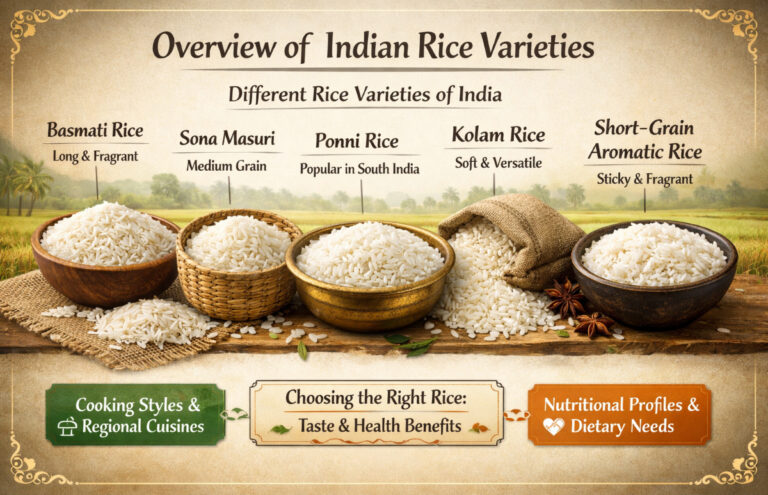
India grows thousands of rice varieties that are commonly grouped by their grain length, aroma, texture and processing method. Each group suits different cooking styles and regional cuisines.
Some well-known Indian varieties include basmati rice, Sona Masuri, Ponni, Kolam and various short-grain aromatic rices. Basmati rice is especially prized for its long grains and fragrant aroma, while others are chosen for their unique textures or local uses.
Although these varieties serve specific culinary purposes, their nutritional profiles can vary significantly, so choosing the right type depends on both taste and dietary needs.
What Makes Basmati Rice Distinctive
Basmati rice is traditionally cultivated in the foothills of the Himalayas, where a unique combination of mineral-rich soil, cool nights, warm days, and pure mountain water supports its slow maturation. These growing conditions play a major role in developing the rice’s signature qualities.
Key Characteristics
- Naturally occurring aromatic compounds that produce a subtle, nutty fragrance when cooked
- Extra-long, slender grains that create a refined, elegant appearance on the plate
- Lengthwise expansion during cooking, rather than swelling in width, which preserves grain shape
- Light, fluffy texture with minimal stickiness, allowing grains to remain separate
Beyond taste and appearance, these features influence how basmati rice is digested. Its grain structure and cooking behavior often result in slower starch release compared to many other rice types, which is why basmati rice is frequently viewed as a distinct option among Indian rice varieties.
Nutritional Breakdown of basmati rice
Basmati rice is a light, easily digestible source of steady energy that won’t weigh you down.
Key Nutrients
- Complex carbohydrates that provide sustained energy
- Small amounts of protein
- B-vitamins that support metabolism
- Magnesium and potassium for healthy muscle and nerve function
Because basmati rice is less dense than many other rice varieties, it delivers energy without overwhelming digestion, making it a good choice for balanced meals.
Glycemic Index of Basmati Rice
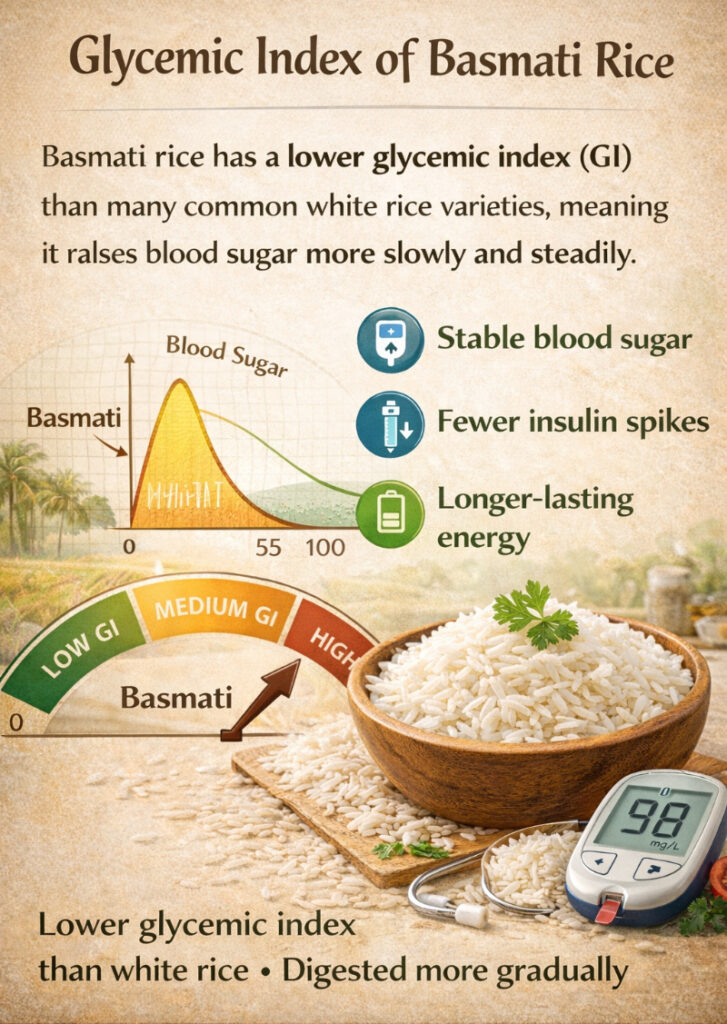
One of the most talked-about health advantages of basmati rice is its lower glycemic index (GI) compared with many common white rice varieties. This means it tends to raise blood sugar more slowly and steadily after a meal, rather than causing sharp spikes.
Why the Glycemic Index Matters
The glycemic index plays an important role in how your body responds to carbohydrates. Foods with a lower GI can:
Help maintain more stable blood sugar levels
Reduce rapid insulin spikes
Support sustained energy and fewer post-meal crashes
Because basmati rice is digested more gradually, it’s often considered a smarter carbohydrate choice for people who want better blood sugar control. This can be especially helpful for individuals managing diabetes, insulin resistance, or simply aiming for balanced energy throughout the day.
That said, portion size, cooking method, and whether the rice is eaten with fiber, protein, or fats all influence its final impact on blood sugar. When prepared and paired thoughtfully, basmati rice can fit well into a health-conscious diet without sacrificing flavor or satisfaction.
Basmati Rice and Digestive Health
Basmati rice is widely valued for being gentle on the digestive system, making it a popular choice for people who prefer light, easily tolerated meals.
Why Basmati Rice Supports Digestion
- Gradual starch digestion helps slow glucose absorption, supporting steadier blood sugar levels and reducing sudden energy swings.
- Lower tendency to cause bloating compared with many shorter-grain or highly processed rice varieties.
- Mild, non-irritating nature makes it easier to tolerate for those with sensitive stomachs or mild digestive discomfort.
Thanks to these characteristics, basmati rice is commonly included in recovery diets, simple home-style meals, and eating plans designed to support digestive comfort without sacrificing taste.
Role of Basmati Rice in Weight Management
Weight management isn’t just about cutting carbohydrates—it’s about choosing smarter ones. Basmati rice stands out among many white rice varieties because of its relatively lower glycemic index, which means it’s digested more slowly and provides steadier energy.
How Basmati Rice Can Support Weight Control
Helps you feel satisfied with moderate portions
Slower digestion can promote a longer-lasting feeling of fullness, making it easier to avoid overeating.Reduces frequent hunger and cravings
By supporting steadier blood sugar levels, basmati rice may help prevent the sharp energy dips that often lead to snacking.Encourages balanced, mindful meals
When paired with vegetables, protein, and healthy fats, basmati rice fits naturally into meals that support portion awareness and nutritional balance.
While basmati rice isn’t a weight-loss food on its own, it can be a practical and enjoyable carbohydrate choice for people aiming to manage their weight—especially when portion sizes are controlled and meals are thoughtfully composed.
Basmati Rice and Heart Health: What It Really Offers
Heart health is shaped by balanced blood sugar, healthy fats, adequate minerals, and overall dietary quality. Basmati rice can play a supporting role, but it’s not a standalone solution.
Why Basmati Can Be a Smarter Rice Choice
Naturally cholesterol-free
Very low in fat
Typically has a lower glycemic index than many white rice varieties
Brown basmati provides more magnesium, which supports normal blood pressure
When eaten in moderate portions and paired with vegetables, lean protein, and healthy fats, basmati rice can fit comfortably into a heart-conscious diet. For maximum benefit, choosing brown basmati rice and focusing on whole-diet balance matters far more than the rice alone.
White Basmati vs Brown Basmati: What’s the Real Difference?
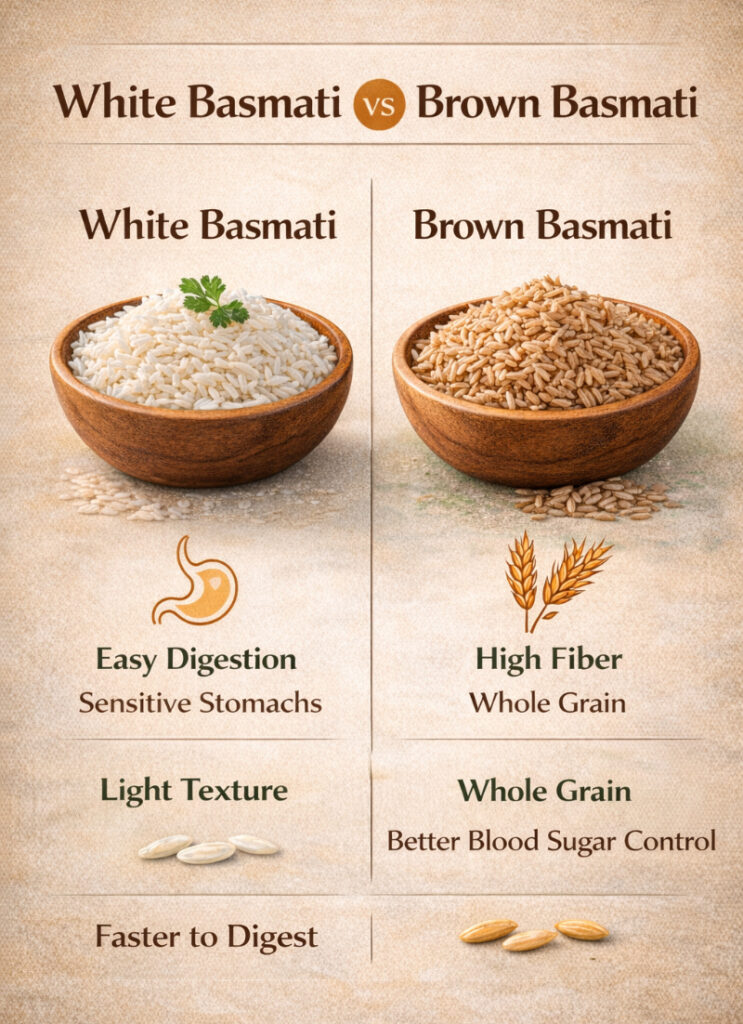
Both white basmati and brown basmati rice come from the same rice variety, but they’re processed differently—and that affects digestion, nutrition, and who benefits most from each.
Key Differences at a Glance
| Type of Basmati | Main Health Benefit | Best Suited For |
|---|---|---|
| White Basmati | Easier and faster digestion | Sensitive stomachs, recovery diets |
| Brown Basmati | Higher fiber and micronutrients | Blood sugar control, gut health |
What Makes Them Different?
Brown basmati rice keeps its outer bran layer intact. This layer contains fiber, magnesium, and other micronutrients, which slow digestion and help moderate blood sugar responses. Because of this, brown basmati is often recommended for people focusing on metabolic health or longer-lasting fullness.
White basmati rice, on the other hand, has the bran removed. This makes it lighter, softer, and quicker to digest. While it contains slightly fewer nutrients, it’s often better tolerated by people with digestive sensitivities or those recovering from illness.
Which One Is Healthier?
There isn’t a single “better” choice—it depends on your needs:
Choose brown basmati if you want more fiber, slower digestion, and improved blood sugar stability.
Choose white basmati if digestion, comfort, and quick energy matter more.
Both can fit into a healthy diet when portion size and overall meal balance are considered.
Bottom line: brown basmati offers more nutritional depth, while white basmati offers greater digestive ease—and both have a place at the table.
Aged Basmati Rice: Science-Backed Benefits
Aging is a traditional and science-supported process that enhances the quality of basmati rice. By allowing the grains to mature under controlled conditions, producers improve texture, aroma, and cooking performance.
Key Benefits of Aging Basmati Rice
Lower moisture content, resulting in firmer, more resilient grains
Superior grain separation, ideal for fluffy, non-sticky rice dishes
Enhanced natural aroma, characteristic of authentic basmati
Gentler digestion for many people, due to improved texture and steadier starch absorption
For these reasons, premium basmati rice is typically aged for 12 to 24 months, striking a balance between flavor development and optimal cooking quality.
Comparison with Other Indian Rice Varieties
India produces a wide range of rice varieties, each suited to different culinary and nutritional needs. While all provide energy, they differ in how quickly they are digested and how they affect blood sugar levels.
| Rice Type | Digestive & Glycemic Characteristics |
|---|---|
| Basmati | Light texture, generally lower to medium GI, especially when aged |
| Sona Masuri | Softer grain, moderate to higher GI depending on processing |
| Ponni | Denser texture, higher starch content, tends to digest more quickly |
| Short-grain rice | Stickier texture, often higher GI and faster glucose release |
Because aged basmati rice typically digests more slowly and causes steadier blood sugar responses, it is often preferred in health-focused and balanced diets. However, individual responses can vary based on preparation and overall meal composition.
Healthy Cooking Methods for Basmati Rice
How you cook basmati rice plays a significant role in its nutritional quality, digestibility, and impact on blood sugar. Even a naturally aromatic, long-grain rice like basmati can lose some of its benefits if it’s prepared incorrectly. Using gentle, traditional cooking methods helps preserve its texture, nutrients, and health advantages.
Why Cooking Method Matters
Cooking affects:
Starch structure and digestibility
Glycemic response after meals
Texture, aroma, and grain separation
Nutrient retention
Proper preparation can make basmati rice easier to digest and more satisfying, while poor methods may lead to mushy texture and faster blood sugar spikes.
Best Practices for Cooking Basmati Rice
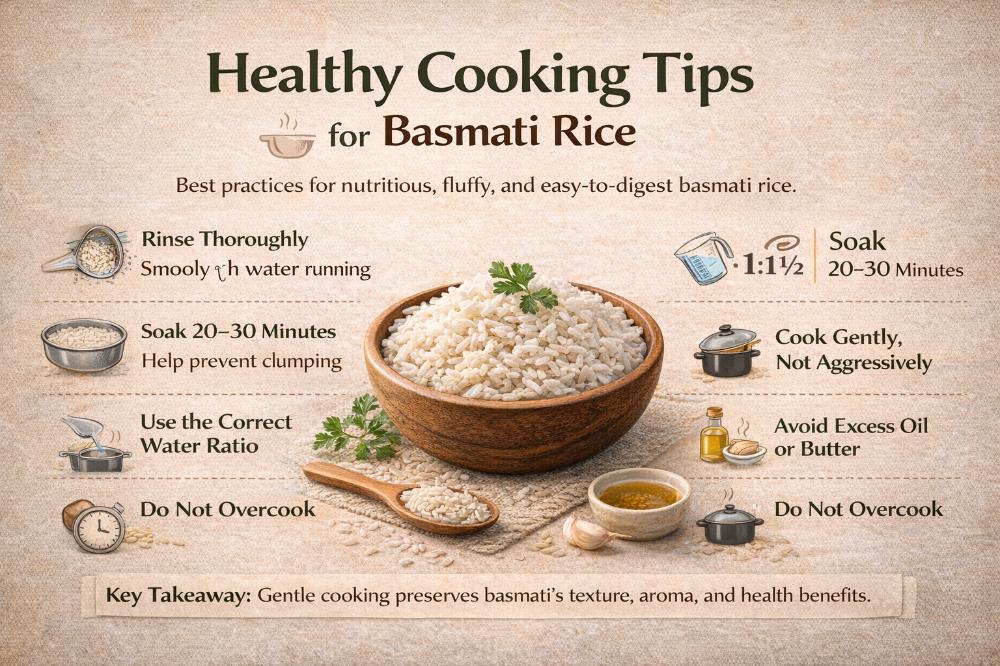
1. Rinse Thoroughly
Rinse the rice under running water until it runs clear. This removes excess surface starch, helping prevent clumping and improving digestion.
2. Soak Before Cooking (20–30 Minutes)
Soaking allows the grains to absorb water gradually, leading to better lengthwise expansion, more even cooking, and improved texture. It may also slightly reduce cooking time and enhance digestibility.
3. Use the Correct Water Ratio
Typically, a 1:1.5 or 1:2 rice-to-water ratio works well for basmati. Too much water can break the grains and increase starch release.
4. Cook Gently, Not Aggressively
Bring the rice to a brief boil, then simmer gently with the lid on. High heat and excessive stirring can damage the grains and make the rice sticky.
5. Avoid Excess Oil or Butter
While small amounts of healthy fats are fine, heavy oiling adds unnecessary calories and can mask basmati’s natural aroma and flavor.
6. Do Not Overcook
Overcooking causes grains to split, lose structure, and release more starch, which can raise the glycemic response. Properly cooked basmati should be tender yet separate.
7. Let the Rice Rest After Cooking
Allow the rice to sit covered for 5–10 minutes after cooking. This helps moisture redistribute evenly and improves grain separation.
Optional Health-Focused Tips
Pair basmati rice with fiber-rich vegetables, protein, or healthy fats to further moderate blood sugar response
Cooling cooked basmati rice slightly before reheating may increase resistant starch formation
Steaming or absorption methods are generally better than boiling and draining
Key Takeaway
Simple, mindful cooking techniques preserve basmati rice’s natural structure, aroma, and digestibility. When rinsed, soaked, gently cooked, and not overloaded with fats, basmati rice remains light, flavorful, and suitable for balanced, health-conscious meals.
Storage, Safety, and Quality Standards
Proper storage plays a key role in preserving both the safety and flavor of basmati rice. Using airtight containers, keeping rice in a cool and dry environment, and protecting it from moisture help prevent spoilage, pest infestation, and aroma loss. When stored correctly, basmati rice maintains its quality for an extended period while remaining safe for consumption.
Global Demand, Exports, and Authenticity
Basmati rice holds a unique position in global food markets due to its protected origin, consistent quality standards, and strong consumer trust. Its reputation is built not only on taste and aroma, but also on strict cultivation and export controls.
India is one of the world’s largest rice exporters, and Basmati rice represents a premium segment within this trade. International bodies such as the Food and Agriculture Organization (FAO) recognize India’s leading role in global rice exports, with Basmati commanding higher value due to its distinctive characteristics and regulated supply chain.
Learn more at: https://www.fao.org
Why Basmati Commands Global Trust
Geographical protection: Authentic Basmati is grown only in designated regions of India and Pakistan, safeguarding its identity.
Strict quality controls: Export-grade Basmati must meet standards for grain length, aroma, aging, and purity.
Premium positioning: Longer aging periods and careful processing contribute to higher market value.
Strong traceability: Reputable exporters maintain clear sourcing and certification, reducing fraud and imitation.
This global demand and regulatory oversight reinforce Basmati rice’s authority as a trusted, authentic staple. For consumers, it means confidence in both quality and origin – key reasons why Basmati remains the preferred choice in health-focused and premium diets worldwide.
Frequently Asked Questions (FAQs)
1. Is Basmati rice healthier than regular white rice?
Basmati rice is often considered a healthier option than many regular white rice varieties because it typically has a lower to medium glycemic index and a lighter texture. This means it raises blood sugar more gradually and is often easier to digest. However, overall health impact still depends on portion size, preparation, and what it’s eaten with.
2. Can people with diabetes eat Basmati rice?
Yes, people with diabetes can usually include Basmati rice in their diet in moderation. Its lower glycemic index compared to many other white rices makes it a better choice when paired with fiber-rich vegetables, protein, and healthy fats. Portion control and cooking method are key.
3. Is brown Basmati rice better than white Basmati rice?
Both have benefits. Brown Basmati rice retains the bran layer, providing more fiber, magnesium, and micronutrients, which can help with blood sugar control. White Basmati rice is lighter and easier to digest, making it suitable for sensitive stomachs or recovery diets. The better option depends on individual health goals.
4. Does Basmati rice help with weight management?
Basmati rice can support weight management when eaten mindfully. Its aroma, long grains, and lighter texture often promote satiety with smaller portions, helping reduce overeating. It works best as part of balanced meals rather than as a standalone food.
5. What makes aged Basmati rice special?
Aging reduces moisture content in the grains, which improves grain separation, aroma, and texture during cooking. Aged Basmati also tends to digest more comfortably and delivers a more refined eating experience. Premium varieties are often aged for 12–24 months.
6. Is Basmati rice gluten-free?
Yes. All natural Basmati rice is 100% gluten-free, making it safe for people with celiac disease or gluten sensitivity. As always, packaged products should be checked for cross-contamination warnings.
7. How does Basmati rice compare to other Indian rice varieties?
Compared to varieties like Sona Masuri or Ponni, Basmati rice is generally lighter, more aromatic, and lower in glycemic response. Short-grain rice varieties tend to be stickier and may raise blood sugar more quickly.
8. Does cooking method affect the health benefits of Basmati rice?
Absolutely. Rinsing, soaking, using the correct water ratio, and avoiding overcooking help maintain texture and reduce excess starch. Overcooking or excessive oil can increase glycemic impact and reduce nutritional quality.
9. Is organic Basmati rice healthier than conventional Basmati?
Organic Basmati rice is grown without synthetic pesticides or fertilizers, which may appeal to those prioritizing environmental or chemical exposure concerns. Nutritionally, both organic and conventional Basmati are similar, but quality depends on sourcing and handling.
10. How can you identify authentic Basmati rice?
Authentic Basmati rice is typically sourced from specific regions in India and Pakistan, has long, slender grains, and releases a distinct aroma when cooked. Reputable brands, geographic labeling, and certification marks help ensure authenticity.
Conclusion
Among the many Indian rice varieties available today, Basmati rice stands out as a well-balanced choice that combines tradition, nutrition, and sensory appeal. Its naturally lower glycemic impact, light digestibility, and favorable nutrient profile make it particularly suitable for people seeking steady energy, metabolic balance, and digestive comfort. Unlike many refined grains, Basmati rice offers satisfaction without heaviness, supporting mindful portion control and long-term dietary consistency.
Beyond its health benefits, Basmati rice carries a legacy of quality and trust. Grown in specific regions under strict standards and often aged to enhance flavor and texture, it delivers a unique eating experience that few other rice varieties can match. Its aromatic character, elongated grains, and non-sticky texture elevate everyday meals while remaining versatile enough for both traditional and modern cuisines.
When sourced authentically, stored correctly, and prepared with care, Basmati rice proves that time-honored foods can align seamlessly with contemporary health goals. It serves as a reminder that smart food choices don’t require sacrificing taste or cultural heritage—only an informed and balanced approach to eating.